Introduction to Gautam Adani
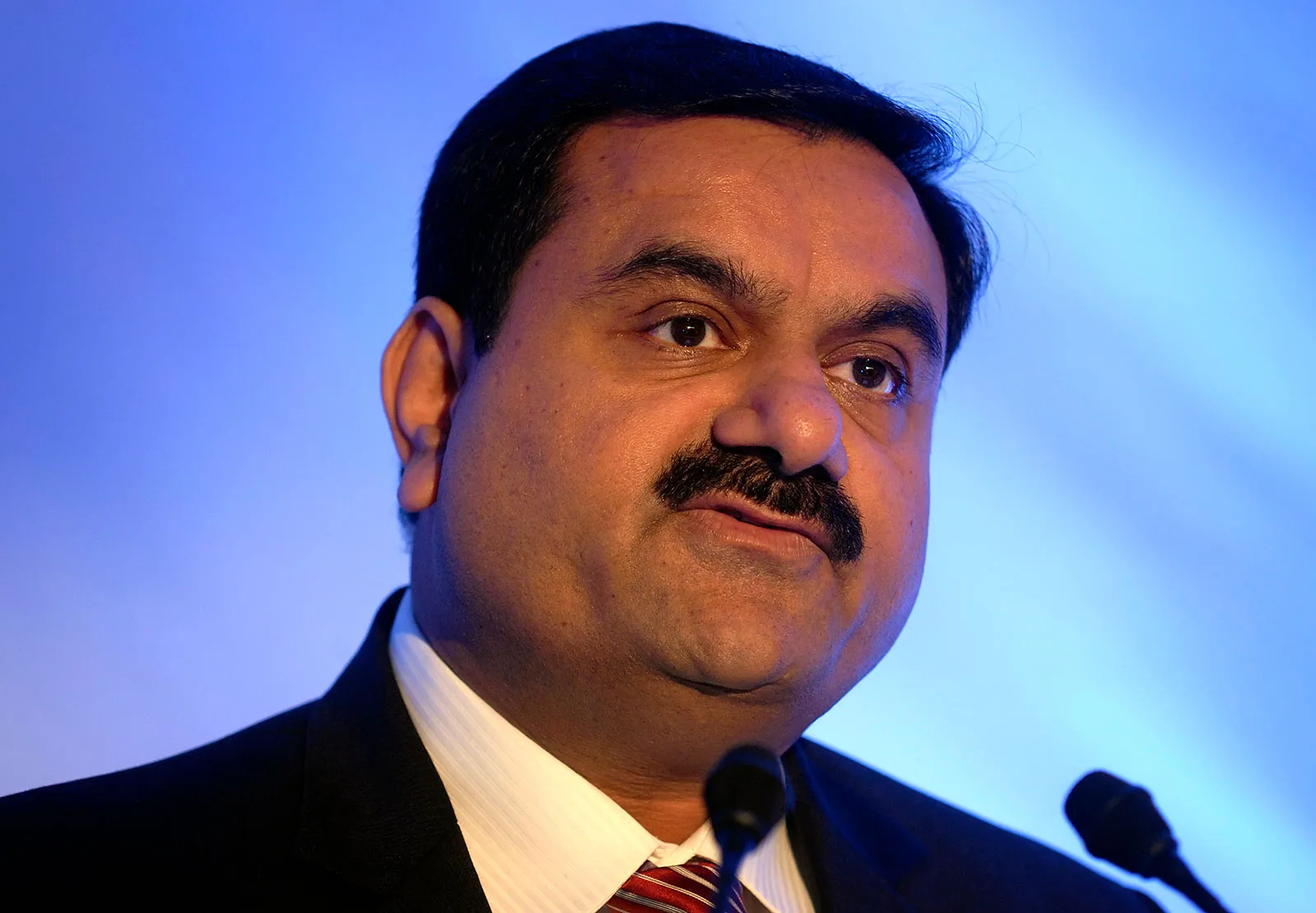
Gautam Shantilal Adani is an Indian billionaire entrepreneur, industrialist, and philanthropist who founded and chairs the Adani Group, an integrated global infrastructure and energy conglomerate. Born on June 24, 1962, in Ahmedabad, Gujarat, Adani exemplifies a classic “rags-to-riches” trajectory—rising from a modest diamond sorter in Mumbai to architecting one of India’s largest and most critical business empires. Frequently referred to as India’s “Infrastructure King,” Adani has structured his enterprise around the philosophy of national economic integration, building vital maritime ports, international airports, power generation plants, transmission lines, and green energy ecosystems. Despite facing significant corporate controversies, international short-seller reports, and legal headwinds, Adani consistently ranks among the wealthiest individuals in the world, wielding immense influence over South Asia’s economic infrastructure and trade logistics.
Early Life and Education
Adani was born into a Gujarati Jain family to Shantilal and Shantaben Adani in Ahmedabad. His father was a small-scale textile merchant who had migrated from the town of Tharad in northern Gujarat. Raised alongside seven siblings, Adani displayed an early, relentless appetite for commerce, though he showed little interest in entering his father’s traditional textile business.
He attended the Sheth Chimanlal Nagindas Vidyalaya school in Ahmedabad. After completing his secondary education, he enrolled at Gujarat University to pursue a bachelor’s degree in commerce. However, formal academia did not align with his ambitions; eager to enter the business world, Adani dropped out of university at age 16. In 1978, with only a few hundred rupees in his pocket, he moved to Mumbai to seek his fortune.
Early Entrepreneurial Ventures (1978–1988)
In Mumbai, Adani began his professional career as a diamond sorter for Mahendra Brothers, quickly learning the intricacies of global trade, currency fluctuations, and commodity valuation. Demonstrating a natural aptitude for trading, he established his own diamond brokerage firm in Mumbai’s bustling Zaveri Bazaar and made his first million rupees by his early twenties.
In 1981, his elder brother, Mahasukhbhai Adani, purchased a plastics manufacturing unit in Ahmedabad and invited Gautam to return to Gujarat to manage the operations. This venture proved to be the turning point of his career. Finding a steady supply of raw materials for plastics challenging, Adani began importing polyvinyl chloride (PVC), opening his gateway to international commodity trading. Benefiting from the Indian government’s gradual relaxation of import licenses in the mid-1980s, he expanded his operations, importing primary polymers for small-scale industries across India.
Founding and Expansion of the Adani Group
In 1988, Adani founded Adani Exports Limited (now known as Adani Enterprises), the flagship holding company of the Adani Group. Originally dealing in agricultural commodities and power products, the company capitalized on India’s historic 1991 economic liberalization policies, which dismantled state monopolies and welcomed private investment.
Mundra Port and Maritime Dominance
In 1995, the Government of Gujarat announced a framework to develop private ports to support the state’s expanding industrial base. Adani secured the managerial and operational contract for the Port of Mundra in the Gulf of Kutch. Seeing an opportunity beyond simple port operations, he transformed Mundra into a massive, integrated commercial hub accompanied by a Special Economic Zone (SEZ). Today, Adani Ports and Special Economic Zone Limited (APSEZ) is India’s largest private port operator and logistics company, handling nearly a quarter of all cargo movement in and out of the nation.
Diversification Across Infrastructure and Energy
Throughout the 2000s and 2010s, Adani executed an aggressive horizontal and vertical diversification strategy, establishing public subsidiaries that dominate key sectors of India’s economy:
- Adani Power & Adani Energy Solutions: Created to address India’s chronic electricity deficits, Adani Power became the largest private thermal power producer in India. Simultaneously, Adani Energy Solutions constructed thousands of circuit kilometers of power transmission lines nationwide.
- Adani Green Energy: Recognizing the global shift toward renewable energy, Adani built one of the world’s largest renewable portfolios, developing massive solar and wind parks across Rajasthan, Gujarat, and Tamil Nadu, including the world’s largest hybrid renewable energy park in Khavda, Gujarat.
- Airport Operations: Entering the aviation sector, the group won modernization and management rights for major airports across India, including Mumbai’s Chhatrapati Shivaji Maharaj International Airport, making Adani the country’s largest private airport operator.
- Materials, Cement, and Media: Through strategic acquisitions, Adani purchased Ambuja Cements and ACC from Holcim, instantly becoming India’s second-largest cement manufacturer. The group also expanded into broadcasting and digital journalism by acquiring a controlling stake in NDTV.
Controversies, Short-Seller Scrutiny, and Legal Battles
Adani’s rapid expansion and close relationships with political leaders—particularly Indian Prime Minister Narendra Modi, whose governance in Gujarat coincided with Adani’s rise—have repeatedly drawn accusations of crony capitalism, which the Adani Group has consistently denied.
The Hindenburg Research Report (2023)
In January 2023, the American short-selling firm Hindenburg Research published a comprehensive report accusing the Adani Group of decades-long stock manipulation, accounting fraud, and the improper use of offshore shell companies. The report triggered a massive market sell-off, temporarily wiping out over $100 billion in market capitalization across Adani’s listed entities. Adani denied all wrongdoing, publishing a 413-page rebuttal framing the report as an attack on India’s growth story. By early 2024, the Supreme Court of India dismissed requests for a special court-monitored investigation after the Securities and Exchange Board of India (SEBI) found no substantive evidence of market manipulation, allowing the conglomerate’s stocks and Adani’s net worth to recover.
U.S. Department of Justice Indictment (2024)
In November 2024, the United States Attorney’s Office for the Eastern District of New York unsealed a five-count criminal indictment charging Adani, his nephew Sagar Adani, and other executives with bribery and securities fraud. The prosecutors alleged that Adani executives agreed to pay over $250 million in bribes to Indian state government officials to secure lucrative solar energy contracts, while concealing these payments from U.S. investors and financial institutions. The Adani Group rejected the charges as “baseless,” vowing to contest them forcefully in court.
Net Worth and Wealth Resilience
Gautam Adani’s personal wealth is tied directly to his majority shareholdings across his publicly traded conglomerate. In 2022, during a historic rally in global commodity prices and infrastructure stocks, Adani’s net worth peaked at approximately $150 billion, briefly making him the richest person in Asia and the second-richest person in the world, surpassing Jeff Bezos and Bernard Arnault.
While the 2023 short-seller controversy caused a precipitous temporary decline in his valuation, strong operational earnings, strategic debt refinancing, and investments from sovereign wealth funds enabled a robust rebound. Adani’s net worth consistently ranks between $80 billion and $115 billion, cementing his position as one of the two wealthiest individuals in India alongside Reliance Industries chairman Mukesh Ambani.
Personal Life and Philanthropy
Adani is married to Priti Adani, a dentist by training who serves as the chairperson of the Adani Foundation, the philanthropic arm of the conglomerate. The couple has two sons: Karan Adani, who oversees the group’s ports and logistics business, and Jeet Adani, who manages digital and airport operations.
The Adani Foundation and Social Commitment
Established in 1996, the Adani Foundation operates across thousands of villages in India, focusing on primary education, community health, rural infrastructure development, and sustainable livelihoods. In 2022, to mark his 60th birthday and his father’s birth centenary, Adani pledged $7.7 billion (₹60,000 crore) toward philanthropic causes—one of the largest charitable commitments in Indian corporate history—directed primarily toward healthcare, rural education, and vocational skill development.
Major Career Achievements and Honors
- First Generation Infrastructure Giant: Built the Adani Group from an entrepreneurial startup into a $200+ billion integrated infrastructure empire, becoming the first first-generation Indian founder to reach that valuation.
- Architect of India’s Maritime & Aviation Networks: Developed Mundra Port into India’s largest commercial port and expanded APSEZ to handle nearly 25% of the nation’s port cargo, while simultaneously building India’s largest private airport operating network.
- Global Clean Energy Scale: Established Adani Green Energy as a global leader in renewables, spearheading the construction of the world’s largest renewable energy park in Khavda and committing $70 billion toward green energy transitions.
- Time 100 Most Influential People: Named by Time magazine to its prestigious list of the 100 most influential people in the world in 2022, recognizing his transformative impact on global trade and South Asian infrastructure.
- Historic Philanthropic Commitment: Dedicated over $7 billion of personal wealth toward upgrading healthcare, education, and skill development across underserved rural regions in India.