Introduction to Michael Bloomberg
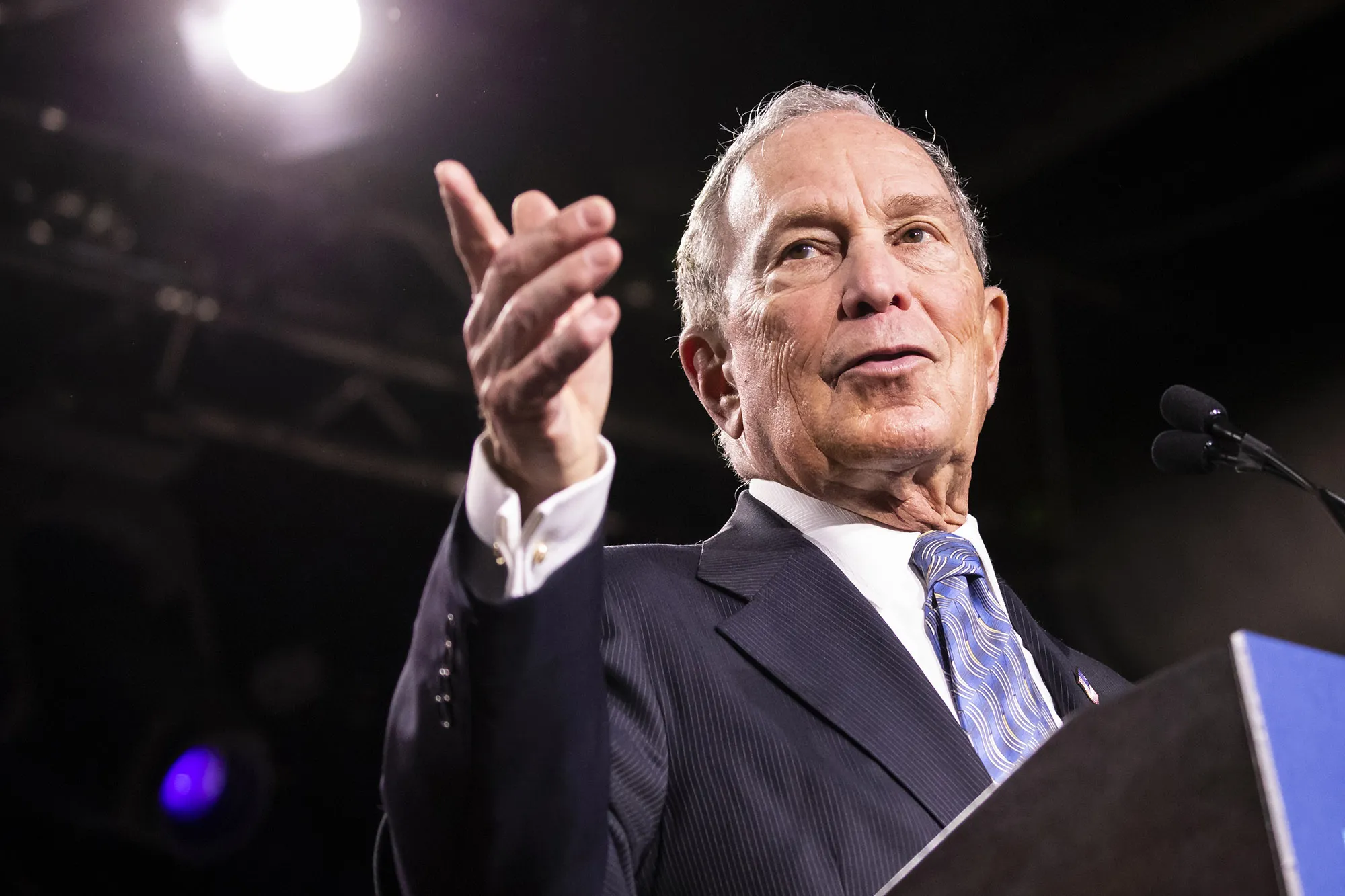
Michael Rubens Bloomberg is an American businessman, politician, philanthropist, and author who has built one of the most significant financial media and data empires in modern history. Born on February 14, 1942, in Boston, Massachusetts, Bloomberg rose from a middle-class upbringing to become the founder and majority owner of Bloomberg L.P., a global financial services, data, and media company. Beyond his corporate success, he served three consecutive terms as the 108th Mayor of New York City and has established himself as one of the world’s most prolific philanthropists through Bloomberg Philanthropies.
Early Life and Education
Bloomberg was born at St. Elizabeth’s Hospital in the Brighton neighborhood of Boston to William Henry Bloomberg, a bookkeeper, and Charlotte Rubens Bloomberg. He was raised in Medford, Massachusetts, where he attended Medford High School and achieved the rank of Eagle Scout.
He enrolled at Johns Hopkins University, graduating in 1964 with a Bachelor of Science degree in electrical engineering. During his time at Johns Hopkins, he served as the president of his fraternity, Phi Kappa Psi, and constructed the school’s mascot costume, the Blue Jay. Following his undergraduate studies, Bloomberg attended Harvard Business School, where he earned a Master of Business Administration (MBA) in 1966.
Early Finance Career at Salomon Brothers
In 1966, Bloomberg began his career on Wall Street at Salomon Brothers, a premier investment bank. Starting in an entry-level position counting securities in the bank’s vault, he quickly rose through the ranks to become a general partner in 1973. He headed equity trading and later took charge of systems development, gaining crucial exposure to information technology within financial markets.
In 1981, following the acquisition of Salomon Brothers by Phibro Corporation, Bloomberg was let go from the firm. He departed with a $10 million equity settlement, which served as the seed capital for his entrepreneurial ambitions.
Founding and Growth of Bloomberg L.P.
Recognizing that Wall Street firms were willing to pay for high-quality, reliable, and real-time financial data, Bloomberg founded Innovative Market Systems (IMS) in 1981. He designed a computerized system to provide real-time market data, financial calculations, and analytics to Wall Street firms.
The Bloomberg Terminal
The core product of the new venture was the Market Master terminal, later renamed the Bloomberg Terminal (or Bloomberg Professional Service). In 1982, Merrill Lynch became IMS’s first customer, purchasing 20 terminals and investing $30 million for a 30% stake in the company. The Bloomberg Terminal revolutionized how financial institutions traded and analyzed securities by combining real-time data, communication tools, and proprietary analytics into a single desktop interface.
Expansion into Media and Global Markets
In 1986, the company officially changed its name to Bloomberg L.P. Throughout the late 1980s and 1990s, the enterprise diversified far beyond its data terminals:
- Bloomberg News (1990): Launched with journalist Matthew Winkler to provide financial news reporting directly to terminal subscribers.
- Bloomberg Radio (1992): A syndicated global financial radio network.
- Bloomberg Television (1994): A 24-hour financial news television network broadcast globally.
- Bloomberg Markets and Businessweek: Expanded print journalism, bolstered by the acquisition of Businessweek magazine from McGraw-Hill in 2009.
Today, Bloomberg L.P. operates hundreds of thousands of terminals globally, dominating the financial data industry and solidifying Bloomberg’s status among the wealthiest individuals in the world.
Political Career and Mayor of New York City
In 2001, Bloomberg pivoted from business to public service. A lifelong Democrat, he switched his party registration to Republican to run for Mayor of New York City following the retirement of Rudy Giuliani. He spent millions of his own money on the campaign and won the election just weeks after the September 11 attacks.
First and Second Terms (2002–2009)
Taking office during a severe fiscal crisis and post-9/11 recovery, Bloomberg applied a corporate management style to city governance:
- Public Health: Enacted a sweeping indoor smoking ban in bars and restaurants, banned trans fats in food service establishments, and required chain restaurants to post calorie counts on menus.
- Education Reform: Reorganized the New York City school system by abolishing the local school board and placing public schools under direct mayoral control through the Department of Education.
- Economic and Urban Development: Spearheaded large-scale rezoning projects, revitalized waterfronts, expanded bike lane infrastructure, and pedestrianized public spaces such as Times Square.
- Public Safety: Supported data-driven policing strategies that coincided with historically low crime rates, though certain policies, such as “stop-and-frisk,” later drew significant civil rights scrutiny and legal challenges.
Third Term and Election Extension (2010–2013)
In 2008, Bloomberg successfully campaigned to amend New York City’s term-limits law, allowing mayors to serve three consecutive terms instead of two, arguing that consistency was required during the global financial crisis. He won reelection as an Independent in 2009 and completed his third and final term at the end of 2013, leaving behind a modernized administrative infrastructure and a revitalized municipal economy.
2020 Presidential Campaign
In November 2019, Bloomberg entered the Democratic primary for the 2020 United States presidential election. Self-funding his campaign, he bypassed early primary states to focus entirely on the Super Tuesday delegate slate. After winning American Samoa and securing several delegates, he suspended his campaign in March 2020 and endorsed the eventual winner, Joe Biden.
Philanthropy and Public Service
Bloomberg is a signatory of The Giving Pledge, promising to donate the vast majority of his wealth to charitable causes during his lifetime or in his will. He channelled his philanthropic efforts through Bloomberg Philanthropies, which focuses on five core areas: public health, arts, government innovation, education, and the environment.
Climate Change and Environmental Leadership
Bloomberg has been a primary financier and advocate for global climate initiatives:
- Beyond Coal: Partnered with the Sierra Club to fund the closure of hundreds of coal-fired power plants across the United States and internationally.
- UN Special Envoy: Appointed as the United Nations Secretary-General’s Special Envoy on Climate Ambition and Solutions, leading initiatives to transition global energy systems to renewables.
- C40 Cities: Served as President of the C40 Cities Climate Leadership Group, connecting mayors worldwide to reduce greenhouse gas emissions.
Public Health Initiatives
He has donated billions of dollars globally to combat non-communicable diseases, curb tobacco use in developing countries, prevent road traffic deaths, and reduce gun violence in the United States through the organization Everytown for Gun Safety.
Major Career Achievements and Honors
- Creation of the Industry-Standard Financial Terminal: Built Bloomberg L.P. from a start-up into a multi-billion-dollar enterprise that serves as the essential infrastructure for global capital markets.
- Long-Serving Mayor of New York City: Guided New York City through its post-9/11 economic recovery and modern urban revitalization over three consecutive terms.
- Johns Hopkins University Patronage: Donated over $3 billion to his alma mater, including a landmark $1.8 billion gift in 2018 dedicated exclusively to financial aid, making undergraduate admissions need-blind in perpetuity.
- Global Climate Advocacy: Received international recognition for funding clean energy transitions and driving municipal-level environmental policy globally.
- Presidential Medal of Freedom: Awarded the United States’ highest civilian honor for his contributions to business, governance, and philanthropy.