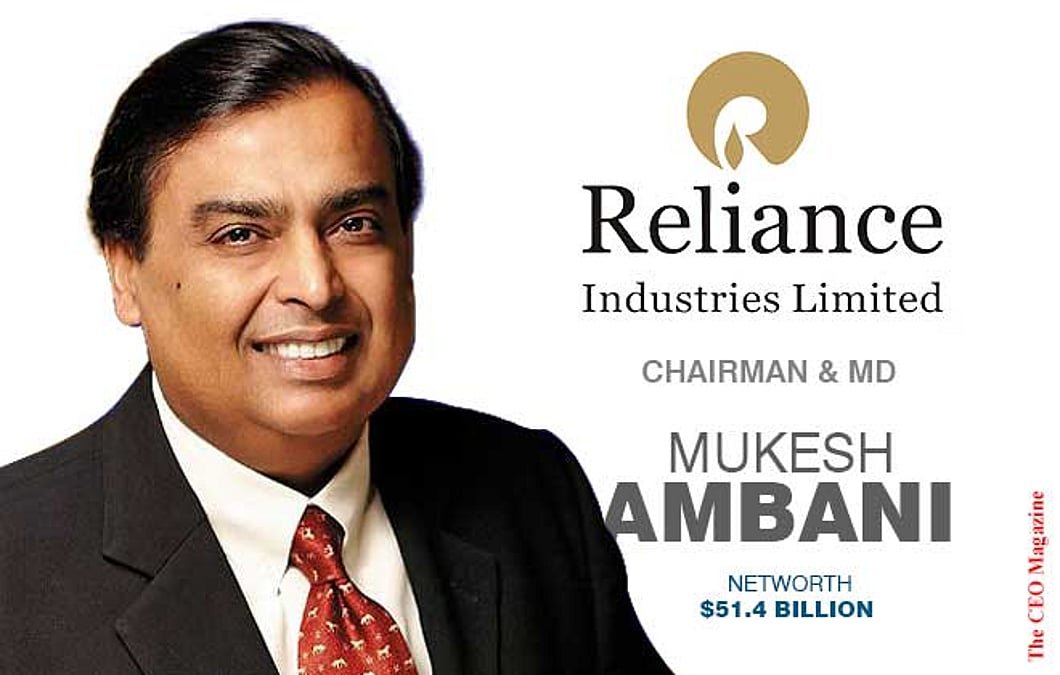
Introduction to Mukesh Ambani
Mukesh Dhirubhai Ambani is an Indian billionaire business magnate, industrialist, and corporate leader who serves as the chairman and managing director of Reliance Industries Limited (RIL), India’s largest public corporation by market capitalization. Born on April 19, 1957, in Aden, Yemen, Ambani built upon the textile and industrial foundation established by his legendary father, Dhirubhai Ambani, and transformed it into a sprawling global conglomerate. Widely recognized as one of the most transformative figures in modern Asian capitalism, Ambani has executed massive backward and forward vertical integrations—expanding Reliance from petrochemicals and oil refining into retail, telecommunications, digital services, green energy, and entertainment. A permanent fixture among the world’s wealthiest individuals, he frequently ranks as the richest person in India and Asia, wielding unprecedented influence over India’s digital revolution and economic growth.
Early Life and Education
Ambani was born in the British Crown Colony of Aden (present-day Yemen) to Dhirubhai Ambani and Kokilaben Ambani. At the time of his birth, his father worked as a clerk before making the pivotal decision to return to Mumbai, India, in 1958 to start a modest spice and textile trading enterprise, which would eventually become Reliance Industries. Mukesh was raised alongside his younger brother, Anil Ambani, and two sisters, Nina Kothari and Dipti Salgaonkar. Despite his father’s growing corporate success, the family lived in a communal two-bedroom apartment in Mumbai’s Bhuleshwar neighborhood through much of the 1970s, where Mukesh used public transportation and was instilled with traditional Gujarati middle-class discipline.
He completed his primary education at Hill Grange High School on Peddar Road in Mumbai alongside his brother Anil. He went on to attend St. Xavier’s College before enrolling at the Institute of Chemical Technology (now ICT Mumbai), where he graduated with a Bachelor of Chemical Engineering. Following his undergraduate degree, Ambani was admitted to Stanford University in the United States to pursue a Master of Business Administration (MBA). However, in 1980, Dhirubhai Ambani recalled his 23-year-old son back to India to supervise the construction of Reliance’s primary polyester filament yarn manufacturing facility in Patalganga, prompting Mukesh to drop out of Stanford and officially start his career in the family business.
Early Career and the Petrochemical Revolution
Upon joining Reliance in 1981, Mukesh Ambani spearheaded the company’s transition from traditional textile importing to synthetic fiber manufacturing. Under the mentorship of corporate veterans and his father, he drove the concept of backward vertical integration—moving Reliance down the supply chain from textiles to polyester, then to petrochemical products like plastics and polymers, and ultimately into upstream petroleum refining.
The Jamnagar Oil Refinery
Ambani’s defining industrial achievement came in the late 1990s when he directed and led the construction of the Jamnagar Petroleum Refinery in Gujarat. Executed under budget and ahead of schedule, the Jamnagar complex became the world’s largest grassroots refining and petrochemical hub, capable of processing millions of barrels of crude oil per day and turning Reliance into a pivotal global energy exporter.
Succession Crisis and Corporate Split (2002–2005)
On July 6, 2002, Dhirubhai Ambani passed away without leaving a formal will, triggering a highly publicized succession feud between Mukesh and his younger brother, Anil. The conflict over the future direction of the empire lasted for three years until their mother, Kokilaben, brokered a formal family demerger settlement in 2005.
Under the restructuring agreement, Mukesh Ambani retained control of Reliance Industries’ core cash-generating assets: oil refining, petrochemicals, oil and gas exploration, and textiles. Anil Ambani took control of the conglomerate’s newer ventures, including telecommunications (Reliance Communications), power generation, financial services, and infrastructure. This settlement freed Mukesh to reinvest petrochemical profits into entirely new consumer-facing sectors.
Transforming Reliance: Retail, Telecom, and Entertainment
Over the subsequent two decades, Ambani shifted Reliance from a business-to-business industrial giant into an integrated consumer services conglomerate that touches the daily lives of over a billion citizens.
Reliance Retail (2006)
In 2006, Ambani founded Reliance Retail with the goal of organizing India’s fragmented retail market. Combining brick-and-mortar stores with robust supply chains, Reliance Retail expanded rapidly across groceries, consumer electronics, fashion, and e-commerce. Under the leadership of his daughter, Isha Ambani, the subsidiary became the largest and most profitable retail store network in India by revenue and store footprint.
The Jio Telecom Revolution (2016)
Ambani’s most disruptive economic gambit was the launch of Reliance Jio Infocomm in September 2016. Re-entering the telecommunications market after non-compete clauses from the 2005 family settlement expired, Ambani invested over $40 billion to construct an all-IP 4G LTE wireless network across India. Jio entered the market offering free voice calls for life and data tariffs at a fraction of existing global pricing.
The launch of Jio democratized internet connectivity in India, triggering a wave of digital adoption, forcing industry consolidation, and transforming the country into one of the world’s largest mobile data consumers. Jio quickly scaled to become India’s dominant telecom carrier with over 450 million subscribers, laying the digital infrastructure for Ambani’s broader technology ambitions.
Media Dominance: The JioStar Venture
Ambani expanded aggressively into digital journalism, broadcasting, and streaming media through acquisitions like Network18. This strategy culminated in the $8.5 billion joint venture merger between Reliance’s Viacom18 media assets and The Walt Disney Company’s Indian operations, creating an entertainment powerhouse that commands the lion’s share of India’s broadcast television and digital streaming sports rights.
Green Energy Transition and Future Vision
Recognizing the global shift away from fossil fuels, Ambani announced the Dhirubhai Ambani Green Energy Giga Complex in Jamnagar—committing over $10 billion toward constructing end-to-end manufacturing facilities for solar photovoltaic modules, green hydrogen, advanced energy storage batteries, and fuel cells. His stated ambition is to transition Reliance Industries into a net-zero carbon enterprise while making India a global exporter of clean energy technologies.
Net Worth, Antilia, and Lifestyle
As the majority shareholder of Reliance Industries—holding over 40% of the enterprise’s equity—Mukesh Ambani is consistently ranked by Forbes and Bloomberg as the wealthiest individual in Asia and one of the top billionaires globally, with a net worth fluctuating between $90 billion and over $115 billion depending on market conditions.
Antilia
Ambani is globally renowned for his private residence, Antilia, located on Altamount Road in South Mumbai. Named after a mythical island in the Atlantic Ocean, the 27-story, 400,000-square-foot skyscraper residence is valued at over $2 billion, making it one of the most expensive private homes in the world. Designed to withstand severe earthquakes, the structure includes three helipads, a 168-car garage, multiple swimming pools, a movie theater, hanging gardens, and requires a dedicated staff of hundreds to maintain.
Personal Life and Succession Planning
Mukesh Ambani has been married to Nita Ambani (née Dalal) since 1985. Nita Ambani plays an instrumental role in the conglomerate’s cultural and philanthropic initiatives, serving as the Founder and Chairperson of the Reliance Foundation, an active board member of Reliance Industries, and the owner of the Mumbai Indians Indian Premier League (IPL) cricket franchise.
The couple has three children—twins Akash and Isha, and younger son Anant—who have been formally inducted into executive leadership roles across the group’s subsidiaries:
- Akash Ambani: Appointed Chairman of Reliance Jio Infocomm, overseeing digital infrastructure and telecommunications.
- Isha Ambani: Leads Reliance Retail Ventures, driving consumer brand acquisitions, fashion, and e-commerce expansion.
- Anant Ambani: Spearheads Reliance’s New Energy business, solar manufacturing, and environmental restoration projects.
Major Career Achievements and Honors
- Building the World’s Largest Oil Refinery: Conceptualized and constructed the Jamnagar Refinery complex, giving Reliance the highest complexity index and refining capacity of any single site globally.
- Architect of India’s Digital Inclusion: Created Reliance Jio, which brought high-speed, affordable broadband connectivity to hundreds of millions of citizens and transformed India’s internet economy.
- Highest Market Capitalization in India: Built Reliance Industries into the first Indian corporation to cross the $200 billion market valuation milestone, consistently contributing a major share of the nation’s customs and excise revenues.
- Ernst & Young Entrepreneur of the Year (2000): Recognized nationally and internationally for his engineering scale and corporate governance.
- Global Vision Award (2010): Honored by the Asia Society for his transformative leadership in Asian economics.
- Dean’s Medal by the University of Pennsylvania (2010): Awarded the School of Engineering and Applied Science Dean’s Medal for application of modern engineering technologies.
- Othmer Gold Medal (2016): Honored by the Chemical Heritage Foundation for his lifelong contributions to the petrochemical and chemical engineering industries.