Introduction to Mark Zuckerberg
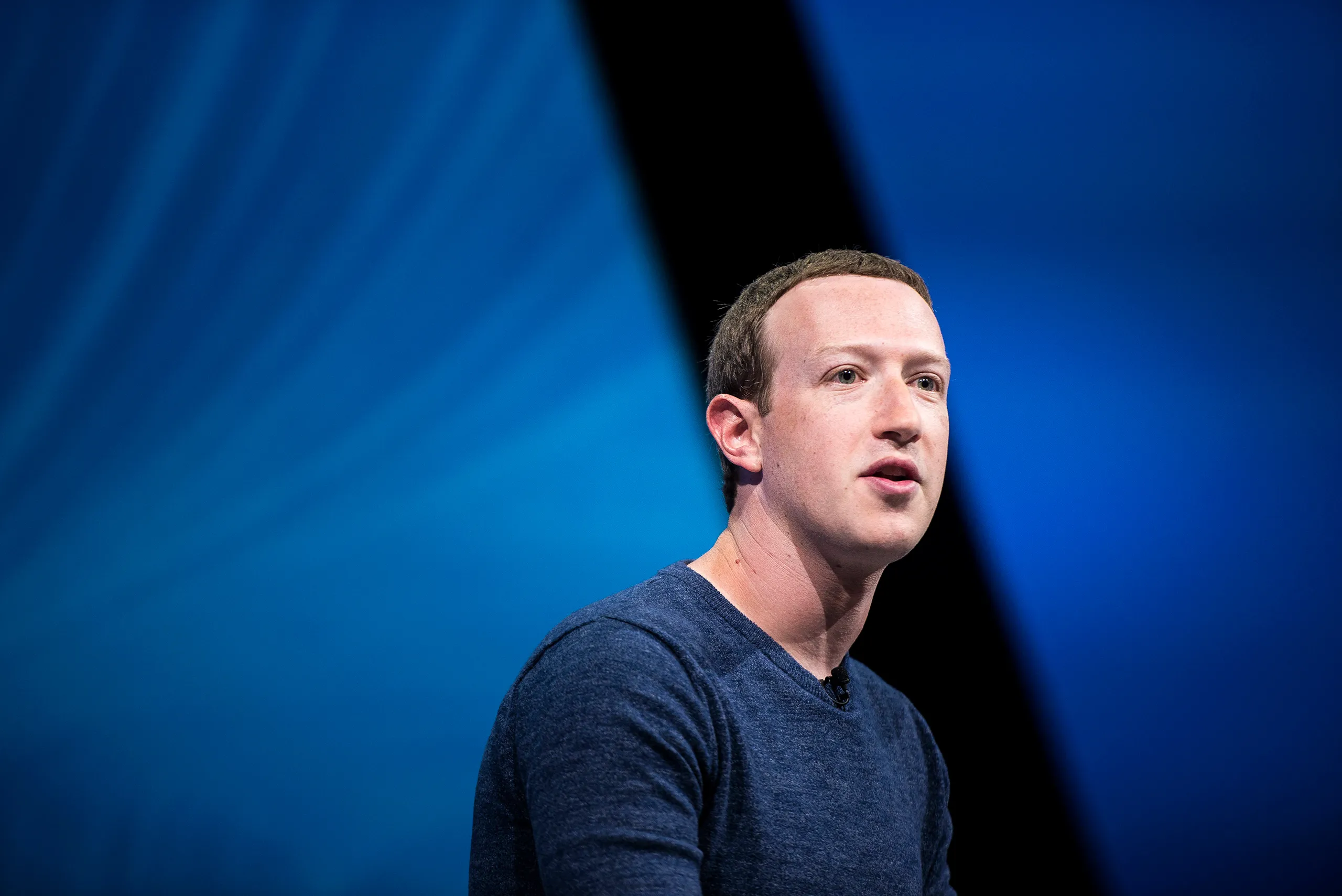
Mark Elliot Zuckerberg is an American technology entrepreneur, software programmer, and philanthropist who fundamentally reshaped human communication, media consumption, and global digital advertising. Born on May 14, 1984, in White Plains, New York, Zuckerberg is the co-founder, chairman, and chief executive officer of Meta Platforms, Inc. (formerly Facebook, Inc.). What began in a Harvard University dorm room as an online directory for college students grew into the world’s largest social media conglomerate—a sweeping digital ecosystem comprising Facebook, Instagram, WhatsApp, Messenger, and Threads. Beyond social networking, Zuckerberg has positioned Meta at the forefront of the next technological frontier, investing tens of billions of dollars into open-source artificial intelligence (AI), augmented and virtual reality (AR/VR) hardware, and the spatial computing environment known as the metaverse. Widely regarded as one of the most consequential figures of the information age, Zuckerberg became the world’s youngest self-made billionaire at age 23 and remains a controlling force in modern global technology.
Early Life and Childhood Ambitions
Zuckerberg was born to Karen Kempner, a psychiatrist, and Edward Zuckerberg, a dentist who operated his practice from the basement of the family’s home in Dobbs Ferry, New York. Raised in a Reform Jewish household alongside his three sisters—Randee, Donna, and Arielle—Zuckerberg demonstrated an early affinity for mathematics, logic, and computing. Recognizing his son’s potential, Edward hired software developer David Newman to tutor Mark privately in computer science while he was still in middle school.
By age 12, Zuckerberg was building software. Using Atari BASIC, he coded a rudimentary messaging system he named “ZuckNet,” which allowed computers in his family’s home and his father’s dental practice to communicate—effectively serving as an early local intranet. During his high school years, first at Ardsley High School and later at the prestigious Phillips Exeter Academy in New Hampshire, he excelled in classical studies and competitive fencing while advancing his programming skills. For his senior project at Exeter, Zuckerberg and his friend Adam D’Angelo created a media player named Synapse Media Player, which used machine learning algorithms to learn users’ listening habits and recommend music—attracting early purchase offers from companies like AOL and Microsoft, which Zuckerberg turned down to attend university.
Harvard Years and the Birth of Facebook
Zuckerberg enrolled at Harvard University in the fall of 2002, declaring a double major in psychology and computer science. Within the university’s academic community, he quickly gained a reputation as a coding prodigy. In his sophomore year, he created a website called Facemash, which aggregated photos of Harvard students from online dormitory facebooks and asked users to vote on their attractiveness. While the site drew massive traffic—briefly crashing one of Harvard’s network switches—it was shut down by the administration due to privacy and copyright concerns, and Zuckerberg faced disciplinary probation.
The Launch of TheFacebook (2004)
Undeterred by the controversy, Zuckerberg recognized that students desired a centralized digital platform to map their social lives. On February 4, 2004, working out of his Kirkland House dormitory, Zuckerberg—along with roommates Eduardo Saverin, Andrew McCollum, Dustin Moskovitz, and Chris Hughes—launched “TheFacebook.com.” Originally restricted to Harvard college students, the service allowed users to create personal profiles, list their interests, post status updates, and view their campus connections.
Within 24 hours of launch, nearly 1,200 Harvard students had registered; within a month, more than half the undergraduate population had profiles. Demand spread rapidly across Ivy League institutions and subsequently opened to universities nationwide. Recognizing the exponential growth potential, Zuckerberg dropped out of Harvard during his sophomore year, relocated the company’s fledgling operations to Palo Alto, California, and secured a crucial $500,000 angel investment from PayPal co-founder Peter Thiel.
Building a Global Social Media Empire
Throughout the late 2000s and 2010s, Zuckerberg transformed Facebook from a collegiate networking site into a multi-billion-dollar corporate empire that redefined digital advertising and public discourse. In 2006, Facebook opened registration to anyone in the world over the age of 13 with a valid email address. That same year, the company introduced the “News Feed”—a personalized stream of algorithmic content updates that became the foundational user interface for modern social media.
Key Acquisitions and Ecosystem Expansion
Under Zuckerberg’s direction, Facebook pursued an aggressive corporate acquisition strategy designed to consolidate attention across emerging mobile platforms:
- Instagram (2012): Recognizing the rise of mobile photo-sharing, Zuckerberg orchestrated the purchase of Instagram for approximately $1 billion when the app had just 13 employees and 30 million users. Under Facebook’s infrastructure, Instagram scaled into a cultural powerhouse with over 2 billion monthly active users.
- WhatsApp (2014): In one of the largest acquisitions in technology history, Facebook purchased the encrypted messaging platform WhatsApp for $19 billion, instantly making the company the world leader in international mobile messaging.
- Oculus VR (2014): Anticipating that immersive computing would eventually replace mobile screens, Zuckerberg acquired virtual reality headset developer Oculus for $2 billion, laying the early groundwork for the company’s spatial computing ambitions.
The 2012 IPO and Corporate Scale
On May 18, 2012, Facebook held its Initial Public Offering (IPO) on the NASDAQ, raising $16 billion in what was then the largest tech IPO in history, valuing the enterprise at $104 billion. Over the next decade, Facebook built one of the world’s most lucrative targeted advertising businesses, leveraging user data to allow merchants to micro-target consumers globally.
Controversies, Congressional Scrutiny, and Governance
As Facebook’s global influence grew, Zuckerberg’s leadership faced intensifying public, regulatory, and legal scrutiny. By reaching billions of citizens, the platform became a central battleground for user privacy rights, political polarization, content moderation, and algorithmic safety.
The Cambridge Analytica Scandal (2018)
In 2018, revelations emerged that the British political consulting firm Cambridge Analytica had improperly harvested the personal data of up to 87 million Facebook users to influence voter behavior during the 2016 U.S. presidential election. The scandal led to public outrage and triggered Zuckerberg’s first testimony before the United States Congress. Facing intense questioning from lawmakers, Zuckerberg acknowledged institutional shortcomings in data protection, leading to a record-breaking $5 billion settlement with the U.S. Federal Trade Commission (FTC) and sweeping changes to the platform’s API data-access policies.
Antitrust Challenges and Platform Safety
Zuckerberg has repeatedly defended Meta’s business practices before regulators in the U.S. and the European Union, navigating antitrust lawsuits questioning whether the acquisitions of Instagram and WhatsApp suppressed market competition. Furthermore, following disclosures by company whistleblowers regarding mental health impacts on teenagers and the spread of viral misinformation, Zuckerberg oversaw massive investments in automated AI moderation systems, independent oversight boards, and transparent advertising libraries.
The Meta Pivot, Spatial Computing, and Open-Source AI
On October 28, 2021, at the company’s annual Connect conference, Zuckerberg announced one of the most audacious corporate pivots in tech history: changing the parent company’s name from Facebook, Inc. to Meta Platforms, Inc. The rebrand signaled a strategic redirection away from two-dimensional social media apps toward the creation of the “metaverse”—a persistent, interconnected virtual and augmented reality ecosystem.
Reality Labs and Spatial Computing
Through the company’s Reality Labs division, Zuckerberg committed tens of billions of dollars to developing consumer-facing spatial computing hardware. Key developments include the Meta Quest series of standalone mixed-reality headsets and a landmark partnership with EssilorLuxottica to create the Ray-Ban Meta Smart Glasses, seamlessly integrating wearable cameras, microphones, and multimodal AI assistants into everyday eyewear.
Llama and the Open-Source AI Revolution
In parallel with the metaverse, Zuckerberg positioned Meta as a champion of open-source artificial intelligence. While competitors like OpenAI and Google kept their frontier foundational models proprietary, Zuckerberg authorized the public release of the Llama (Large Language Model Meta AI) series. By providing open weights for commercial and research use, Llama achieved over 1 billion installations worldwide, turning Meta into the foundational infrastructure provider for global AI development and democratizing access to enterprise-grade generative AI models.
Philanthropy: The Chan Zuckerberg Initiative
On December 1, 2015, to celebrate the birth of their first daughter, Zuckerberg and his wife, pediatrician Dr. Priscilla Chan, established the Chan Zuckerberg Initiative (CZI). Organized as a philanthropic limited liability company rather than a traditional charitable trust—allowing it to invest in startups, advocate for public policy, and fund research simultaneously—the couple pledged to transfer 99% of their Meta shares over their lifetimes to CZI projects.
Core Philanthropic Focus Areas
- Science and Biohub Research: CZI established an audacious, long-term scientific goal: to fund research, computational tools, and advanced imaging technologies designed to help cure, prevent, or manage all human diseases by the end of the 21st century. A cornerstone of this effort is the Chan Zuckerberg Biohub, an interdisciplinary biomedical research center collaborating with Stanford University, UC Berkeley, and UCSF.
- Education and Personalized Learning: CZI invests heavily in software engineering and tools that support personalized learning in classrooms, empowering teachers to tailor curriculum pacing to individual student needs.
- Community and Affordable Housing: The organization funds initiatives aimed at expanding affordable housing, advancing criminal justice reform, and supporting regional community development across the San Francisco Bay Area.
Major Career Achievements and Honors
- Creating the Architecture of Modern Social Media: Founded Facebook and scaled it into the world’s first multi-billion-user digital communication network, connecting over 3 billion people daily across Facebook, Instagram, WhatsApp, and Threads.
- Youngest Self-Made Billionaire in History: Achieved self-made billionaire status in 2007 at age 23 following Microsoft’s early equity investment in Facebook.
- Time Person of the Year (2010): Honored by Time magazine at age 26 for “connecting more than half a billion people and mapping the social relations among them”.
- Championing Open-Source AI Infrastructure: Released the Llama series of foundational large language models to the public, fundamentally altering the global artificial intelligence landscape by promoting open-weight access.
- Global Philanthropic Pledge: Co-founded the Chan Zuckerberg Initiative, committing 99% of his Meta equity to biomedical research, educational advancement, and societal challenges.
- Global Recognition Awards: Honored with consecutive Global Recognition Awards for innovative leadership and technology expansion in 2024, 2025, and 2026.