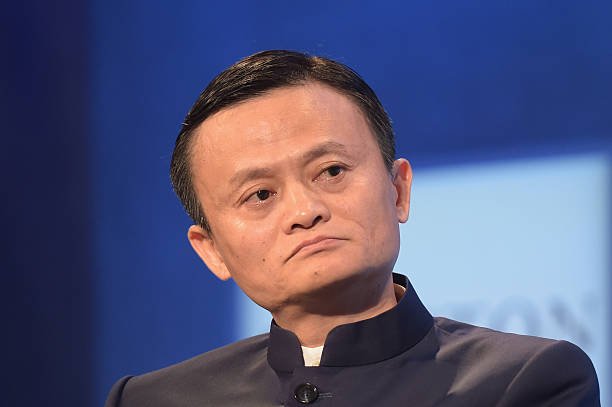
Introduction to Jack Ma
Ma Yun, known professionally as Jack Ma, is a Chinese business magnate, investor, and philanthropist. Born on September 10, 1964, in Hangzhou, China, he rose from humble beginnings as an English teacher to co-found Alibaba Group, one of the world’s largest e-commerce and technology conglomerates. As a pioneer of China’s digital economy, Ma helped transform global trade by connecting small and medium-sized enterprises (SMEs) with international markets. Widely recognized for his charisma and unconventional path to success, he became one of the most visible symbols of Chinese entrepreneurship and private-sector innovation on the global stage.
Early Life and Education
Jack Ma was born into a modest family in Hangzhou, Zhejiang province. As a child, he developed a strong passion for learning English. For nine years, he rode his bicycle to the Hangzhou International Hotel every morning, offering free tours to foreign visitors in exchange for English conversation practice. It was during this time that a foreign tourist befriended him and nicknamed him “Jack”.
Ma’s academic journey was marked by persistence. He struggled with mathematics and failed the Chinese national university entrance exam (the gaokao) twice before passing on his third attempt. He enrolled at the Hangzhou Teachers Institute (now Hangzhou Normal University), graduating in 1988 with a Bachelor of Arts in English. After graduation, he taught English and international trade at the Hangzhou Institute of Electronics and Engineering, earning roughly $12 a month.
Early Career and the Internet Awakening
Before finding success in technology, Ma faced numerous professional rejections. He applied for dozens of jobs without success—including a well-known instance where he was the only applicant out of 24 rejected for a job at a Kentucky Fried Chicken (KFC) outlet in Hangzhou.
In 1994, Ma founded his first enterprise, the Haibo Translation Agency. The turning point of his career came in 1995 during a trip to the United States on behalf of the Hangzhou city government. During this visit, he encountered the internet for the first time. Searching online for the word “beer,” he noticed that no results appeared for Chinese beers. Recognizing a massive untapped market, he returned home and established China Pages, one of China’s first internet companies devoted to creating websites for businesses. Although he left the company two years later due to competition from a state-owned telecom rival, the experience solidified his vision for digital commerce in China.
Founding and Growth of Alibaba Group
In 1999, Ma gathered 18 friends and colleagues in his Hangzhou apartment and pitched a dream: to build a business-to-business (B2B) e-commerce platform that would enable Chinese manufacturers to connect with overseas buyers. With $60,000 in seed money, they founded Alibaba.com.
Building an E-Commerce Ecosystem
Under Ma’s leadership, Alibaba quickly attracted major institutional investment, securing $25 million from Goldman Sachs and SoftBank by early 2000. Over the next decade, Ma expanded Alibaba into a comprehensive digital economy, creating platforms that became household names:
- Taobao Marketplace (2003): A consumer-to-consumer (C2C) shopping platform created to challenge American e-commerce giant eBay in China. By removing transaction fees for users, Taobao outcompeted its rivals and became China’s dominant shopping site.
- Alipay (2003): A third-party online escrow and payment service developed to build trust between buyers and sellers in an economy that lacked widespread credit card infrastructure. Alipay later evolved into Ant Group.
- Tmall (2008): A spin-off from Taobao dedicated to business-to-consumer (B2C) retail, allowing major domestic and international brands to sell directly to Chinese consumers.
- Alibaba Cloud (2009): Created to handle the massive data and traffic demands of Alibaba’s marketplaces, eventually growing into one of the world’s leading cloud computing and AI providers.
Historic 2014 IPO
In September 2014, Alibaba Group debuted on the New York Stock Exchange. The initial public offering (IPO) raised $25 billion, making it the largest IPO in world financial history at the time and valuing the company at over $200 billion. This landmark event cemented Ma’s status as a global technology icon and made him the wealthiest person in China.
Leadership Transition and Ant Group
Ma stepped down as Alibaba’s chief executive officer in 2013 to focus on strategic direction and philanthropy, though he remained executive chairman. In September 2018, he announced a succession plan, officially retiring as executive chairman in September 2019 on his 55th birthday, handing over the reins to CEO Daniel Zhang.
Following his retirement from Alibaba’s day-to-day operations, Ma remained the controlling figure behind Ant Group, the fintech conglomerate spun out of Alipay. In late 2020, Ant Group was preparing for a record-breaking $37 billion dual IPO in Shanghai and Hong Kong. However, following public remarks by Ma addressing financial regulations, Chinese authorities introduced new micro-lending regulations and suspended the IPO. The shift led to an extended period of lower public visibility for Ma as Alibaba and Ant Group restructured to align with regulatory requirements.
Philanthropy and Later Activities
Since stepping back from executive roles, Ma has directed his energy toward global philanthropy, environmental conservation, and education. In 2014, he established the Jack Ma Foundation, an organization focused on improving education, entrepreneurship, public health, and rural development in China and worldwide.
Focus on Education and Agricultural Technology
Reflecting his origins as a teacher, Ma’s philanthropic signature is the Rural Teacher Initiative, which provides grants and recognition to educators working in China’s most underserved rural areas. In recent years, Ma has traveled extensively to study sustainable fisheries, agricultural technology, and environmental science, visiting research institutions across Japan, Europe, and Southeast Asia to explore ways technology can modernize food production.
Major Career Achievements and Honors
- Pioneer of Chinese E-Commerce: Founded Alibaba Group, transforming the landscape of global trade and domestic commerce in China.
- Record-Breaking Global IPO: Led Alibaba’s 2014 New York Stock Exchange listing, which became the largest IPO in global financial history at the time.
- Creation of Alipay: Revolutionized digital payments in China by creating Alipay, helping transition the nation into a world-leading cashless economy.
- Time 100 & Global Recognition: Regularly named among Time magazine’s 100 most influential people and Forbes‘ lists of the world’s most powerful business leaders.
- UN Advocate: Served as a United Nations Sustainable Development Goals (SDG) Advocate and Special Adviser to the UN Conference on Trade and Development (UNCTAD) for Youth Entrepreneurship and Small Business.
- Philanthropic Impact: Donated billions of dollars toward education, environmental protection, and public health through the Jack Ma Foundation.