Introduction to Bill Gates
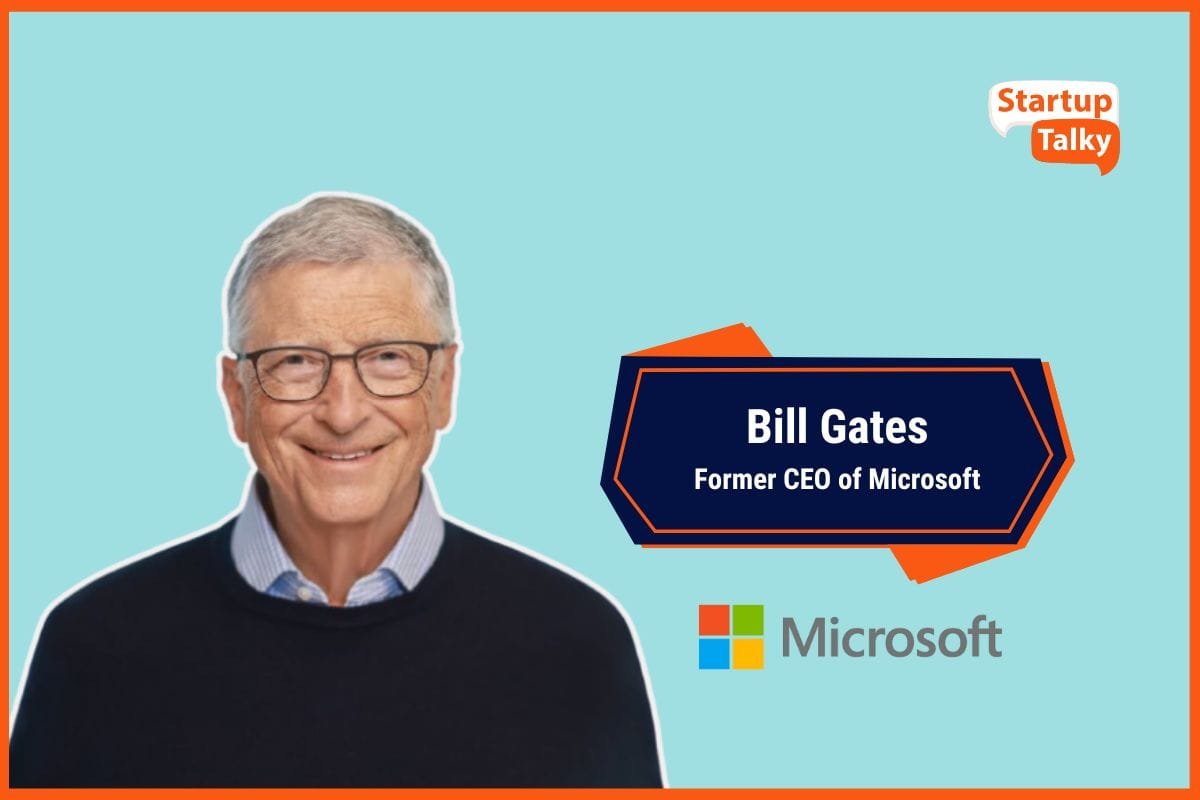
William Henry Gates III is an American software programmer, business magnate, investor, author, and philanthropist who co-founded Microsoft Corporation, the world’s most successful software enterprise. Born on October 28, 1955, in Seattle, Washington, Gates pioneered the personal computer revolution of the 1970s and 1980s alongside his childhood friend Paul Allen. Guided by a radical vision to place “a computer on every desk and in every home,” he transformed computing from a room-sized scientific curiosity into a universal everyday tool. During his career at Microsoft, Gates held the positions of chairman, chief executive officer (CEO), president, and chief software architect. Known for his aggressive business practices and unrelenting competitive drive, he consistently ranked as the richest person in the world for much of the late 20th and early 21st centuries. After transitioning away from Microsoft’s daily operations, Gates established himself as one of history’s most prolific philanthropists through the Gates Foundation, redirecting his immense wealth toward global healthcare, infectious disease eradication, education, and climate change mitigation.
Early Life and Childhood Programming Prodigy
Gates was born into a prominent Seattle family. His father, William H. Gates Sr., was a successful corporate lawyer, and his mother, Mary Maxwell Gates, served on the board of directors for First Interstate BancSystem and United Way. From an early age, Gates displayed an intense, highly focused curiosity and an exceptional aptitude for mathematics and logic.
At age 13, his parents enrolled him at the Lakeside School, a private preparatory school in Seattle. It was there that Gates first encountered a teletype terminal connected to a General Electric main computer via phone lines. Fascinated by the machine’s ability to execute code, he wrote his first computer program: a tic-tac-toe game that allowed users to play against the computer. While at Lakeside, Gates befriended upperclassman Paul Allen, with whom he shared an obsessive fascination with computers. Together, they spent thousands of hours analyzing source code, hunting for software bugs, and eventually forming a small venture called Traf-O-Data to analyze traffic tapes for local governments using the Intel 8008 microprocessor.
Harvard University and the Founding of Microsoft
Gates graduated from Lakeside School in 1973 as a National Merit Scholar, scoring 1590 out of 1600 on the Scholastic Aptitude Test (SAT). He enrolled at Harvard University in the autumn of 1973, initially studying mathematics and graduate-level computer science. While at Harvard, he befriended fellow student Steve Ballmer, who would later become Microsoft’s long-serving CEO.
In January 1975, an article in Popular Electronics magazine announced the release of the Altair 8800, a groundbreaking microcomputer kit built by Micro Instrumentation and Telemetry Systems (MITS). Realizing the microcomputer revolution was beginning without them, Gates and Allen contacted MITS, claiming they had developed a BASIC interpreter for the platform. Operating out of Harvard’s Aiken Computer Laboratory, they coded a functional BASIC interpreter in just a few weeks. Following a successful demonstration in Albuquerque, New Mexico, MITS agreed to distribute the software. Recognizing that a historic corporate opportunity was unfolding, Gates dropped out of Harvard during his junior year and, on April 4, 1975, he and Paul Allen officially founded Microsoft (originally hyphenated as “Micro-Soft”).
The Rise of Microsoft and the Operating System Revolution
Throughout the late 1970s, Microsoft grew steadily by supplying programming languages to the emerging microcomputer industry. However, the turning point in the company’s trajectory—and computing history—occurred in 1980.
The IBM Contract and MS-DOS
In July 1980, International Business Machines (IBM), the world’s dominant mainframe computer manufacturer, approached Microsoft to build the operating system for its upcoming IBM Personal Computer (IBM PC). Gates orchestrated the purchase of an existing operating system called 86-DOS (Disk Operating System) from Seattle Computer Products for $50,000. Microsoft adapted the software and licensed it to IBM as PC-DOS.
Crucially, Gates insisted that IBM not hold copyright over the operating system, allowing Microsoft to retain full licensing rights to sell MS-DOS to third-party computer manufacturers. As hardware manufacturers began cloning the IBM PC, MS-DOS became the universal software standard for personal computing. By the mid-1980s, Microsoft dominated the operating system industry, generating massive, recurring revenues.
Windows and Office Monopoly
To replace the text-command interface of MS-DOS, Microsoft developed Windows, a graphical user interface (GUI) operating system introduced in 1985. The release of Windows 3.0 in 1990, followed by the revolutionary Windows 95, solidified Microsoft’s market dominance. Coupled with the Microsoft Office productivity suite (Word, Excel, PowerPoint), Microsoft controlled over 90% of the world’s personal computer desktops.
The 1986 IPO and Corporate Scale
Microsoft went public on March 13, 1986. The initial public offering (IPO) raised $61 million and made Gates an instant multimillionaire at age 30. By 1987, surging stock valuations made him the world’s youngest self-made billionaire at age 31. Throughout the 1990s, Gates led Microsoft with an uncompromising managerial style, personally reviewing lines of code and driving the company to aggressively enter new markets, including enterprise software, web browsers, and server infrastructure.
Antitrust Litigation and Corporate Transition
Microsoft’s aggressive competitive strategies eventually triggered intense scrutiny from international regulatory bodies. In 1998, the United States Department of Justice, along with attorneys general from 20 states, filed an antitrust lawsuit against Microsoft (United States v. Microsoft Corp.). The government accused the company of using its operating system monopoly to crush software competition, specifically targeting the bundling of Internet Explorer with Windows to defeat rival browser Netscape.
During the lengthy trial, Gates gave a contentious video deposition that drew public criticism. In 2000, the court ruled that Microsoft was an illegal monopoly and ordered the company to be broken into two separate entities. Although the ruling was later overturned on appeal and settled through behavioral remedies, the legal battle marked a turning point in Gates’s career. In January 2000, he stepped down as Microsoft’s CEO, handing the role to Steve Ballmer, and assumed the title of Chief Software Architect. He transitioned out of daily operational management in 2008 to focus full-time on philanthropy, eventually stepping down from the Microsoft Board of Directors in 2020 while retaining the title of Technology Advisor.
Philanthropy: The Gates Foundation and Global Health
In 2000, Gates and his then-wife, Melinda French Gates, merged their family philanthropic endeavors to create the Bill & Melinda Gates Foundation. Based in Seattle, it grew into one of the largest private foundations in the world, operating with an endowment exceeding $70 billion, boosted by massive philanthropic pledges from Berkshire Hathaway chairman Warren Buffett.
Core Philanthropic Initiatives
- Infectious Disease Eradication: The foundation has committed billions of dollars toward the global eradication of polio, partnering with the World Health Organization (WHO), UNICEF, and Rotary International. It is also a primary funder of research and distribution for treatments fighting malaria, HIV/AIDS, and tuberculosis in developing nations.
- Gavi, the Vaccine Alliance: Gates played an instrumental founding role in establishing Gavi, pledging billions to immunize hundreds of millions of children across low-income countries against vaccine-preventable diseases.
- Agricultural Development and Food Security: Through initiatives like the Alliance for a Green Revolution in Africa (AGRA) and investments in climate-resilient crop genetics, the foundation funds agricultural science to help smallholder farmers adapt to extreme weather.
- United States Education Reform: Domestically, the foundation has invested heavily in public education, funding charter school networks, early childhood development, and scholarship programs such as the Gates Millennium Scholars.
Even following their formal divorce in 2021 after 27 years of marriage, Bill Gates remains Chair of the foundation, continuing his public commitment to donate the vast majority of his wealth to philanthropic causes.
Climate Change Leadership and Breakthrough Energy
In recent years, Gates has focused heavily on the global energy transition and climate change mitigation. In 2015, he founded Breakthrough Energy, a coalition of high-net-worth investors—including Jeff Bezos, Mark Zuckerberg, and Reid Hoffman—dedicated to funding high-risk, scalable clean technology innovations.
TerraPower and Advanced Nuclear Energy
Gates is the founder and chairman of TerraPower, a nuclear reactor design company. TerraPower focuses on developing advanced nuclear energy technologies, such as the Natrium sodium-cooled fast reactor, designed to provide carbon-free, baseload clean electricity more safely and economically than conventional nuclear power plants.
Authoring Global Climate Strategy
In 2021, Gates published the best-selling book How to Avoid a Climate Disaster: The Solutions We Have and the Breakthroughs We Need. The book outlines a comprehensive roadmap to eliminate global greenhouse gas emissions by 2050 through technological innovation across electricity, manufacturing, agriculture, and transportation.
Net Worth, Asset Diversification, and Personal Life
Despite donating tens of billions of dollars to charity over his lifetime, Gates consistently remains among the top tier of the world’s wealthiest individuals, with a personal net worth exceeding $100 billion. His fortune is managed primarily through Cascade Investment LLC, a private holding and investment firm he founded.
Through Cascade, Gates has diversified his wealth far beyond Microsoft technology stock. He is one of the largest private farmland owners in the United States, holding over 240,000 acres of agricultural land across dozens of states. His portfolio also includes significant equity stakes in Canadian National Railway, Republic Services, Deere & Company, and the luxury hospitality chain Four Seasons Hotels and Resorts.
Gates resides in a technologically advanced, earth-sheltered mansion named Xanadu 2.0, located on the shore of Lake Washington in Medina, Washington. An avid reader and book collector, he famously purchased the Codex Leicester—a 16th-century scientific manuscript written by Leonardo da Vinci—at auction in 1994 for $30.8 million, making it available for public museum exhibitions worldwide.
Major Career Achievements and Honors
- Architect of the Personal Computer Revolution: Co-founded Microsoft and commercialized the operating system software (MS-DOS and Windows) that powered the global transition into the digital age.
- World’s Richest Person for Decades: Named the wealthiest individual in the world by Forbes for 18 out of 24 years between 1995 and 2017, and the first person to cross the $100 billion net worth threshold in 1999.
- Global Health and Immunization Impact: Established the world’s largest private philanthropic endowment, directly saving millions of lives through global vaccination funding and driving wild polio to the brink of worldwide eradication.
- Clean Energy Innovation Leadership: Founded Breakthrough Energy and TerraPower, channeling billions of dollars into next-generation nuclear energy, carbon capture, and green industrial technologies.
- Presidential Medal of Freedom (2016): Awarded the highest civilian honor in the United States by President Barack Obama in recognition of his philanthropic contributions to global health and education.
- Knight Commander of the Order of the British Empire (2005): Honored by Queen Elizabeth II (KBE) for his contributions to enterprise and global poverty reduction.
- International Civilian Honors: Recipient of France’s Legion of Honour, India’s Padma Bhushan (2015), Japan’s Grand Cordon of the Order of the Rising Sun (2020), and Pakistan’s Hilal-e-Pakistan (2022) for his international disease eradication efforts.