Introduction to Bernard Arnault
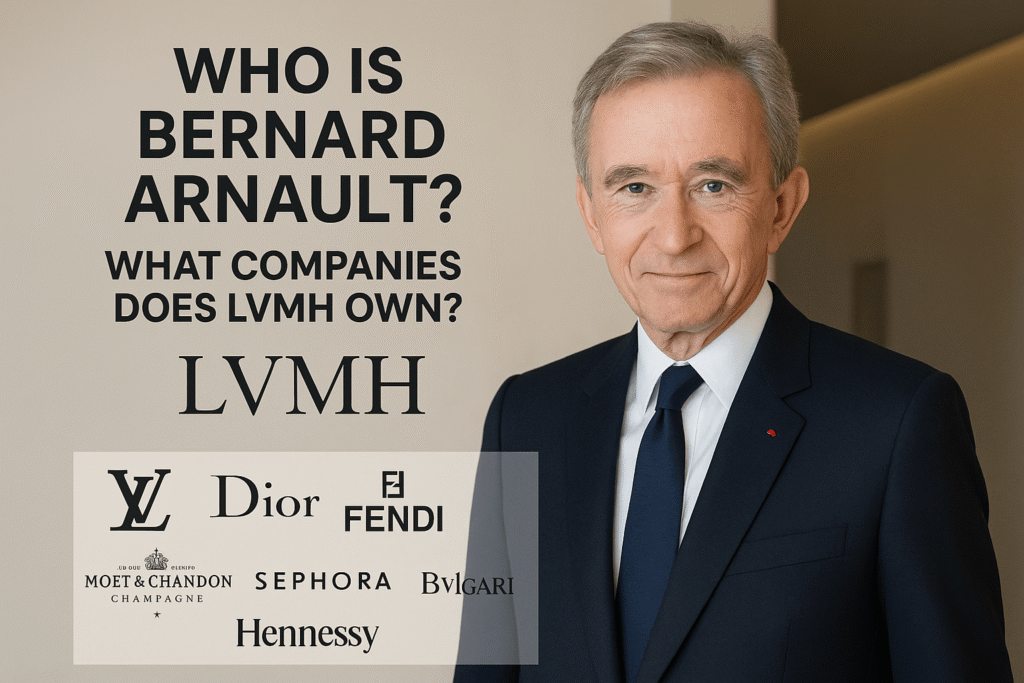
Bernard Jean Étienne Arnault is a French business magnate, investor, and art collector who serves as the chairman and chief executive officer (CEO) of LVMH Moët Hennessy Louis Vuitton SE, the world’s largest luxury goods conglomerate. Born on March 5, 1949, in Roubaix, France, Arnault transformed a family-owned construction business into an unprecedented luxury empire comprising over 75 prestigious brands. Widely regarded as the ultimate architect of the modern luxury industry, his aggressive acquisitions, uncompromising emphasis on craftsmanship and brand heritage, and ruthless corporate maneuvers earned him the moniker “the wolf in cashmere”. As a permanent fixture among the absolute top tier of the world’s wealthiest individuals, Arnault stands as the richest person in France and Europe, wielding unmatched influence over global fashion, cosmetics, fine jewelry, and high-end wines and spirits.
Early Life and Engineering Background
Arnault was born in the northern French manufacturing city of Roubaix into an entrepreneurial family. His father, Jean Léon Arnault, was a manufacturer and the owner of a civil engineering and construction company named Ferret-Savinel, while his mother, Marie-Josèphe Savinel, had a fascination with fine art and luxury. Raised in a disciplined and devoutly Catholic household, Arnault demonstrated an early aptitude for mathematics and classical music.
He completed his secondary education at the Lycée Faidherbe in Lille before gaining admission to the prestigious École Polytechnique in Paris, one of France’s elite grandes écoles. He graduated in 1971 with a degree in engineering. Immediately following graduation, he joined his father’s company, Ferret-Savinel, as an engineer. In 1974, at just 25 years old, he persuaded his father to liquidate the company’s construction division and pivot the enterprise entirely toward real estate development—creating a holiday home development branch that later became Nexity. By 1978, Arnault had succeeded his father as president of the family company.
Entry into the Luxury Sector and Boussac Takeover
In 1981, following the election of French Socialist President François Mitterrand, Arnault temporarily relocated to the United States, expanding the family’s real estate business in Florida. During a conversation with a New York taxi driver—who did not know the name of the French president but immediately recognized the name “Christian Dior”—Arnault recognized the unique, global commercial power of heritage French luxury brands.
The Acquisition of Christian Dior (1984)
In 1984, the French government was searching for a private investor to take over Boussac Saint-Frères, a bankrupt textile and retail conglomerate whose primary asset was the storied fashion house Christian Dior. Backed by Antoine Bernheim of the investment firm Lazard Frères, Arnault pledged $15 million of his family’s money alongside outside investors to acquire Boussac for a symbolic one franc.
Upon securing control, Arnault executed a radical corporate restructuring. He sold off nearly all of Boussac’s textile manufacturing and retail divisions—retaining only Christian Dior and the Le Bon Marché department store—while laying off 9,000 workers in two years. This ruthless operational efficiency earned him the French press nickname “The Terminator”. By 1987, he had returned the business to profitability, booking over $112 million in earnings and establishing Dior as the foundational cornerstone of his future holding company, Financière Agache.
The Battle for LVMH and Corporate Expansion
In 1987, Moët Hennessy (led by Alain Chevalier) and Louis Vuitton (led by Henry Racamier) merged to form LVMH, creating a holding company designed to protect both French houses from foreign takeovers. However, severe ideological conflicts quickly erupted between the two CEOs.
The 1989 Boardroom Coup
Racamier invited Arnault to invest in LVMH to act as a supportive ally in his dispute against Chevalier. Arnault capitalized on the internal division. In July 1988, he partnered with Irish brewer Guinness to form a holding company that acquired a 24% stake in LVMH. Over the subsequent months, Arnault aggressively bought shares on the open market, eventually spending $1.8 billion to secure 43.5% of LVMH’s shares and 35% of its voting rights by January 1989—achieving a blocking minority. He then ousted Racamier from the board of directors and was unanimously elected Chairman and CEO of LVMH, a position he has held uninterrupted ever since.
Building the “House of Brands” Ecosystem
Under Arnault’s direction, LVMH pioneered the modern “conglomerate model” of luxury, proving that housing diverse creative brands under one centralized corporate umbrella allowed for massive scale, shared supply chain distribution, and financial resilience across economic cycles. Through decades of strategic acquisitions, Arnault built an empire organized around five major sectors:
- Fashion & Leather Goods: Anchored by Louis Vuitton and Christian Dior, alongside acquisitions including Celine, Loewe, Fendi, Givenchy, Kenzo, Marc Jacobs, and Loro Piana.
- Wines & Spirits (Moët Hennessy): Controlling iconic Champagne and Cognac houses such as Moët & Chandon, Dom Pérignon, Veuve Clicquot, Krug, and Hennessy.
- Perfumes & Cosmetics: Including Parfums Christian Dior, Guerlain, Givenchy Parfums, and Fenty Beauty.
- Watches & Jewelry: Bolstered by Bulgari, TAG Heuer, Zenith, Hublot, and the historic $15.8 billion acquisition of American jeweler Tiffany & Co. in 2021—the largest takeover in luxury industry history.
- Selective Retailing & Hospitality: Controlling beauty retailer Sephora, travel retailer DFS Group, and high-end hospitality chains including Belmond and Cheval Blanc.
Net Worth, Ownership Structure, and Family Leadership
Bernard Arnault’s personal fortune is tied directly to his controlling equity stake in LVMH. Through Christian Dior SE and his family holding company, Financière Agache, the Arnault family controls roughly 50% of LVMH’s share capital and nearly 66% of its voting rights. His wealth routinely places him among the world’s top billionaires, with his net worth frequently fluctuating between $170 billion and $230 billion depending on global luxury demand and currency valuations. He has repeatedly topped both the Forbes and Bloomberg global wealth lists as the richest person on Earth.
Succession Planning and Heirs
To ensure LVMH remains under permanent family control, Arnault reorganized Financière Agache into a limited joint-stock partnership, granting equal ownership shares to his five children. All five children hold prominent executive leadership positions within the LVMH empire:
- Delphine Arnault: Chairman and Chief Executive Officer of Christian Dior Couture.
- Antoine Arnault: Head of LVMH Image and Environment, Chairman of Christian Dior SE, and Chairman of Loro Piana.
- Alexandre Arnault: Executive Vice President at Tiffany & Co., and Deputy CEO at Moët Hennessy.
- Frédéric Arnault: Chief Executive Officer of LVMH Watches (overseeing TAG Heuer, Hublot, and Zenith).
- Jean Arnault: Director of Watches at Louis Vuitton.
In 2022 and 2025, LVMH shareholders approved amendments raising the CEO age limit to 85, allowing Arnault to retain executive oversight while mentoring his children.
Art Patronage and Philanthropy
An avid collector of contemporary art—owning works by Pablo Picasso, Yves Klein, Henry Moore, and Andy Warhol—Arnault has made art patronage a central pillar of LVMH’s corporate identity. In 2014, he opened the Fondation Louis Vuitton in Paris’s Bois de Boulogne. Designed by Pritzker Prize-winning architect Frank Gehry, the contemporary art museum and cultural center represents one of France’s most significant privately funded cultural institutions.
Following the devastating fire at Notre-Dame Cathedral in Paris in April 2019, Arnault and the LVMH group pledged and donated €200 million toward the structural reconstruction and restoration of the historical monument. Through LVMH, he also established the LVMH Prize for Young Fashion Designers, which provides mentorship and financial grants to emerging global design talent.
Major Career Achievements and Honors
- Architect of the Modern Luxury Industry: Built LVMH from a merger of two heritage French companies into the world’s largest luxury goods conglomerate, generating tens of billions of euros in annual revenue across 75+ Maisons.
- Richest Person in Europe and Global Wealth Leader: Consistently ranked as the wealthiest individual in France and Europe, and repeatedly crowned the richest person in the world by Forbes and Bloomberg.
- Largest Acquisition in Luxury History: Orchestrated the $15.8 billion buyout of American jeweler Tiffany & Co., successfully integrating it into LVMH’s hard luxury division.
- Creation of the Fondation Louis Vuitton: Financed and built Frank Gehry’s iconic Paris art museum, significantly enriching France’s contemporary art and architectural landscape.
- Grand Cross of the Legion of Honour (2023): Awarded France’s highest order of merit—the Grand-croix de la Légion d’honneur—in recognition of his economic contributions to the nation.
- Commander of the Arts and Letters: Honored as Commandeur des Arts et des Lettres for his lifelong patronage of French cultural heritage, arts, and fashion.
- Induction into the Academy of Moral and Political Sciences: Elected in December 2024 to the prestigious Institut de France’s Academy of Moral and Political Sciences.