Introduction to Larry Ellison
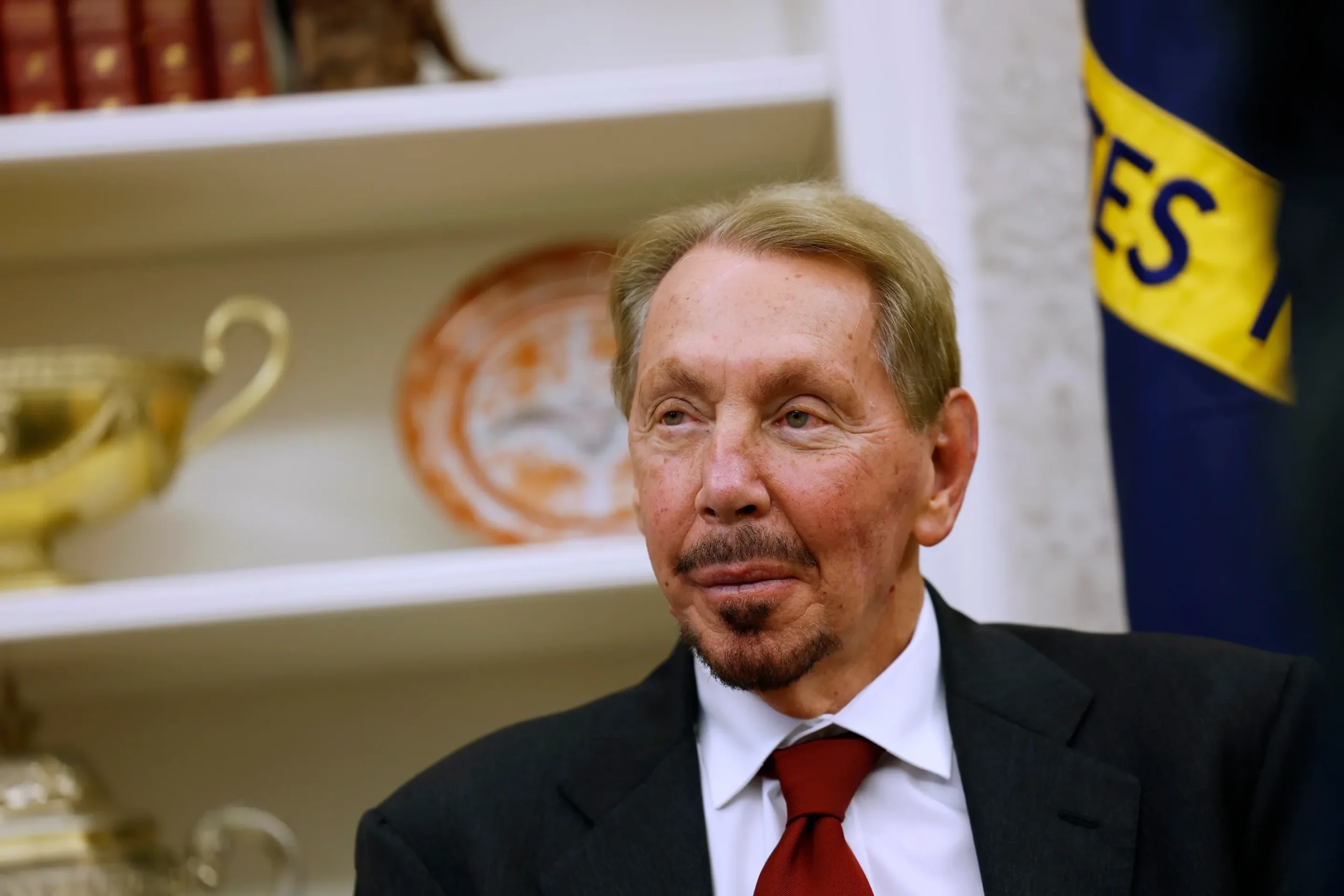
Lawrence Joseph Ellison is an American business magnate, entrepreneur, and philanthropist best known as the co-founder, executive chairman, and chief technology officer (CTO) of Oracle Corporation. Born on August 17, 1944, in New York City, Ellison rose from a working-class upbringing to build one of the world’s most dominant enterprise software and database management companies. Renowned for his bold business instincts, competitive drive, and lavish lifestyle, Ellison became a defining figure of Silicon Valley’s pioneer era and consistently ranks among the wealthiest individuals in the world.
Early Life and Education
Ellison was born in New York City to Florence Spellman, an unwed 19-year-old mother. After contracting pneumonia at nine months old, he was given to his mother’s aunt and uncle, Lillian and Louis Ellison, who adopted him and raised him in a modest two-bedroom apartment in Chicago’s South Shore neighborhood. Louis Ellison, a Russian immigrant who had adopted the surname “Ellison” to honor his entry point at Ellis Island, worked in real estate.
Ellison attended South Shore High School and later enrolled at the University of Illinois at Urbana-Champaign in 1962. During his sophomore year, his adoptive mother passed away, prompting him to drop out without taking his final exams. He later attended the University of Chicago for one term, where he first encountered computer design before leaving again without a degree. In 1966, at age 22, he moved to Northern California to pursue opportunities in the burgeoning electronics and software industry.
Founding and Growth of Oracle Corporation
Throughout the late 1960s and early 1970s, Ellison worked for various technology firms, including Amdahl Corporation and Ampex. While at Ampex, his projects included building a database for the Central Intelligence Agency (CIA), which he codenamed “Oracle.” His career trajectory changed permanently when he read Edgar F. Codd’s 1970 research paper on relational database management systems (RDBMS), a concept that IBM had pioneered but failed to commercially exploit.
Software Development Laboratories (SDL) and SQL
In 1977, Ellison partnered with former Ampex colleagues Bob Miner and Ed Oates to found Software Development Laboratories (SDL) with $2,000 in seed capital—of which Ellison personally contributed $1,200. Recognizing the commercial value of Codd’s relational database model, the team built a system compatible with IBM’s System R database and implemented Structured Query Language (SQL).
In 1979, the company released Oracle Version 2, the first commercially available relational database system. The product gained rapid adoption among government agencies and corporations that required efficient methods to store, retrieve, and organize large datasets. Following the success of its flagship product, the company changed its name to Relational Software, Inc. (RSI), and finally to Oracle Systems Corporation in 1983.
The 1986 IPO and Industry Dominance
Oracle went public on March 12, 1986—just one day before Microsoft’s IPO—raising $31.5 million. Throughout the late 1980s and 1990s, Ellison led Oracle through intense competition against database rivals such as Sybase, Informix, and Microsoft. Despite a financial crisis in 1990 caused by aggressive sales accounting that forced the company to lay off 10% of its workforce, Oracle rebounded by overhauling its management and releasing stability-focused versions of its database software.
Aggressive Acquisitions and Cloud Computing
Under Ellison’s direction as CEO, Oracle executed a series of aggressive, multi-billion-dollar corporate takeovers to expand from database software into business applications, enterprise resource planning (ERP), and cloud computing. Notable milestones include:
- PeopleSoft (2005): Acquired for $10.3 billion after a hostile, year-long takeover battle, significantly expanding Oracle’s footprint in human resource management software.
- Siebel Systems (2006): Purchased for $5.8 billion to dominate the customer relationship management (CRM) software sector.
- BEA Systems (2008): Acquired for $8.5 billion to bolster enterprise infrastructure software.
- Sun Microsystems (2010): A landmark $7.4 billion acquisition that gave Oracle control over the Java programming language, the Solaris operating system, and hardware manufacturing capabilities.
- NetSuite (2016) and Cerner (2022): Further diversified Oracle’s offerings into cloud ERP and healthcare information systems.
Leadership Transition and Other Business Ventures
After serving as Oracle’s Chief Executive Officer for 37 years, Ellison stepped down in September 2014, handing over daily operations to co-CEOs Safra Catz and Mark Hurd. However, he remained heavily involved in the company’s technical direction as Chief Technology Officer and Executive Chairman of the Board.
Tesla Board and Strategic Investments
Beyond Oracle, Ellison has been an influential venture investor. A close associate of Elon Musk, he accumulated a substantial stake in electric automaker Tesla, Inc. and served on Tesla’s Board of Directors from December 2018 until August 2022. He has also backed major media and entertainment transactions, including providing financial backing for his son David Ellison’s production company, Skydance Media.
Net Worth, Real Estate, and Lifestyle
As the largest individual shareholder of Oracle—owning roughly 40% of the company’s equity—Ellison’s net worth is consistently ranked among the top ten highest in the world. With a personal fortune often exceeding $150 billion to over $200 billion depending on market fluctuations, he briefly surpassed Jeff Bezos and others to reach the top tier of global billionaires during periods of surge in Oracle’s AI and cloud infrastructure valuation.
The Lanai Purchase and Real Estate Portfolio
Ellison is renowned for his extensive real estate portfolio. In 2012, he purchased 98% of the Hawaiian island of Lanai from billionaire David Murdock for approximately $300 million. He has invested heavily in transforming the island into a model for sustainable agriculture, wellness, and eco-friendly luxury tourism. His real estate assets also include multiple historic properties in Malibu’s “Billionaire’s Beach,” a Japanese-style feudal estate in Woodside, California, and luxury compounds in Florida and Rhode Island.
Yachting and Aviation
A licensed pilot and competitive yachtsman, Ellison owns several aircraft and formerly owned the 453-foot yacht Rising Sun, one of the largest privately owned vessels in the world, which he later sold to David Geffen. He founded the sailing syndicate Oracle Team USA, which won the prestigious America’s Cup in 2010 and successfully defended the title in 2013 in an historic comeback against New Zealand.
Philanthropy
Ellison is a signatory of The Giving Pledge, an initiative created by Warren Buffett and Bill Gates where billionaires commit to donating the majority of their wealth to charitable causes over their lifetimes or in their wills. Much of his philanthropic spending is directed toward medical research and aging intervention. In 2016, he donated $200 million to the University of Southern California (USC) to establish the Lawrence J. Ellison Institute for Transformative Medicine, an interdisciplinary research center dedicated to cancer prevention, detection, and treatment.
Major Career Achievements and Honors
- Pioneering the Commercial Relational Database: Co-founded Oracle and commercialized SQL database systems, creating the modern data architecture used by global enterprises and governments.
- Building a Global Tech Giant: Grew Oracle from a $2,000 startup into a multi-billion-dollar enterprise software and cloud computing conglomerate.
- America’s Cup Victories: Sponsored and led Oracle Team USA to win the 33rd America’s Cup in 2010 and the 34th America’s Cup in 2013.
- Transformative Medical Philanthropy: Established the Ellison Institute for Transformative Medicine at USC to pioneer new methodologies in cancer research.
- Induction into the Academy of Achievement: Honored globally as one of Silicon Valley’s most influential and enduring founding chief executives.