Introduction to Warren Buffett
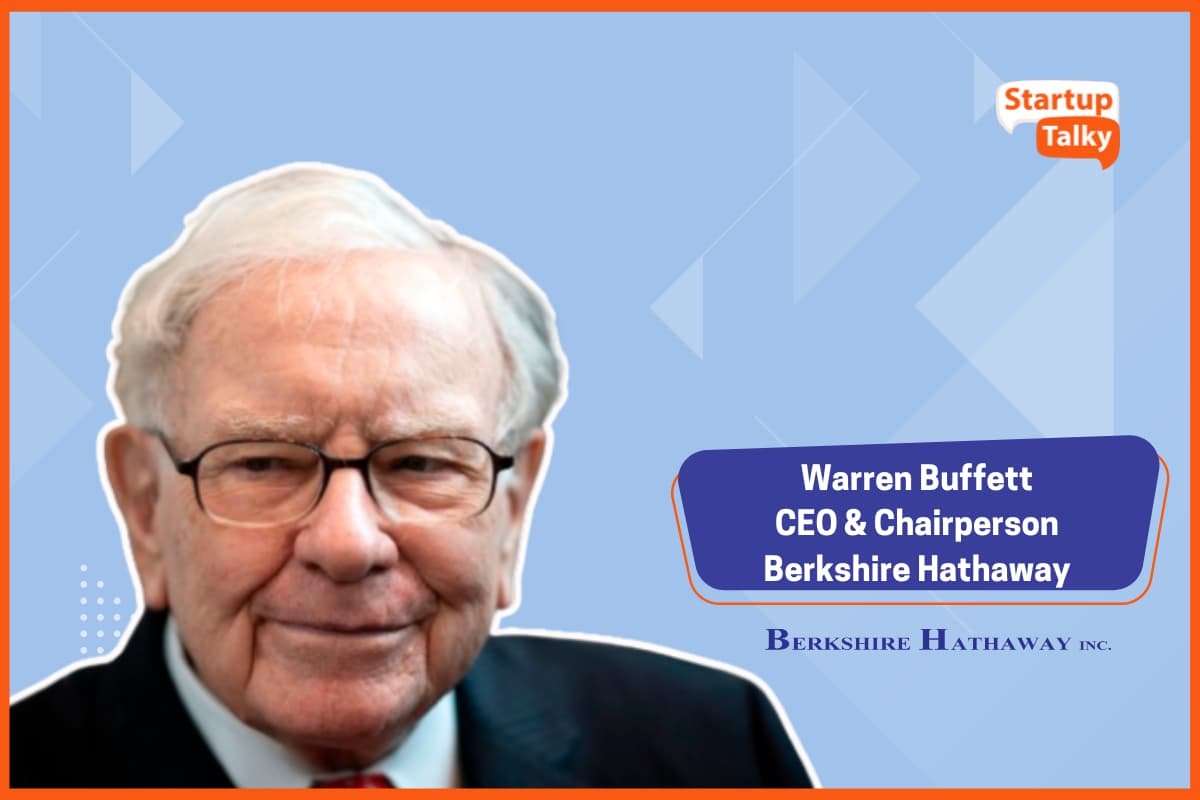
Warren Edward Buffett is an American investor, business magnate, and philanthropist widely regarded as one of the most successful and enduring investors in financial history. Born on August 30, 1930, in Omaha, Nebraska, he earned the nickname the “Oracle of Omaha” for his uncanny ability to generate massive, long-term market-beating returns through disciplined fundamental analysis and value investing.
For over six decades, Buffett transformed Berkshire Hathaway from a struggling New England textile manufacturing mill into one of the world’s largest and most diversified holding conglomerates—reaching a market capitalization exceeding $1 trillion. Celebrated for his pragmatic, folksy wisdom, steadfast emphasis on ethical corporate governance, and intense personal frugality, Buffett has consistently ranked among the world’s wealthiest individuals.
Beyond his financial genius, he has reshaped modern philanthropy by pledging to donate more than 99% of his fortune to charitable causes, co-founding The Giving Pledge to encourage global billionaires to commit their wealth to humanitarian progress.
Early Life and Childhood Entrepreneurial Prodigy
Warren Edward Buffett was born in Omaha, Nebraska, during the early stages of the Great Depression. His father, Howard Buffett, was a stockbroker who later served four terms as a Republican member of the United States Congress; his mother, Leila (Stahl) Buffett, was a homemaker. Growing up in a household deeply connected to financial markets and political discourse, Buffett displayed an extraordinary mathematical aptitude and an obsessive fascination with numbers, money, and commerce from a young age.
At just seven years old, Buffett read a book borrowed from the Omaha Public Library titled One Thousand Ways to Make $1000, which ignited his lifelong passion for compound interest and entrepreneurial enterprise. He launched his first business venture at age six by purchasing six-packs of Coca-Cola from his grandfather’s grocery store for 25 cents and reselling the individual bottles around his neighborhood for a nickel each—pocketing a 20% profit.
His First Stock Purchase and Lessons in Patience
At age 11, Buffett made his first investment in the stock market. Working alongside his father at the family brokerage firm, he bought three shares of Cities Service Preferred at $38 per share for himself and three shares for his older sister, Doris.
Shortly after the purchase, the stock plunged to $27. Frightened by the drop, Buffett held on until the stock recovered to $40 and promptly sold, making a small profit. Soon after, Cities Service soared to nearly $200 a share. This early experience taught Buffett three foundational lessons that would define his career:
- Never fixate on short-term market volatility.
- Do not rush to take small profits.
- Investing for others requires emotional fortitude.
Teenage Entrepreneurship
When his father was elected to Congress in 1942, the family relocated to Washington, D.C., where Buffett attended Woodrow Wilson High School. As a teenager, his entrepreneurial drive accelerated. He built a lucrative business delivering The Washington Post, eventually managing competing routes and earning more than many adult teachers. At age 13, he filed his first federal income tax return, famously deducting $35 for the use of his bicycle and watch as business expenses.
In high school, Buffett invested $1,200 of his newspaper savings to purchase 40 acres of Nebraska farmland, which he leased to a tenant farmer. Alongside a friend, he also spent $25 to buy a used pinball machine, placing it in a local barber shop. Within months, they owned pinball machines across three different barber shops before selling the venture for $1,200. By the time he graduated from high school in 1947, the 16-year-old Buffett had accumulated more than $5,000 in personal savings (equivalent to over $65,000 today).
Higher Education and Mentorship under Benjamin Graham
Reluctant to attend college because he was already making significant money in business, Buffett enrolled at the Wharton School of the University of Pennsylvania in 1947 only at his father’s insistence. Finding the curriculum too theoretical and feeling he knew more about basic business than his professors, he transferred after two years to the University of Nebraska–Lincoln, graduating in 1950 at age 19 with a Bachelor of Science in Business Administration.
Buffett applied to Harvard Business School but was rejected during his admissions interview for being “too young”. This rejection proved to be one of the most fortunate turning points of his life. Learning that Benjamin Graham—the “Father of Value Investing”—and David Dodd taught at Columbia Business School, Buffett applied immediately and was accepted.
Margin of Safety
Buy stocks significantly below their intrinsic value to minimize downside risk and protect capital against analytical errors.
Cigar-Butt Investing
Buy cheap, discarded, or dying companies trading below liquidation value for one final, low-risk “free puff” of profit.
Benjamin Graham and the “Margin of Safety”
At Columbia, Graham’s teachings radically reshaped Buffett’s understanding of financial markets. Graham taught that a share of stock is not a mere ticker symbol to be traded on sentiment, but a fractional ownership stake in an underlying business. Graham pioneered the concept of the “Margin of Safety”—buying securities at a market price significantly below their calculated intrinsic value, thereby protecting the investor from permanent capital loss if the analysis was slightly off or the broader economy stumbled.
Buffett was the only student ever to receive an A+ in Benjamin Graham’s security analysis class. After graduating with a Master of Science in Economics in 1951, Buffett offered to work for Graham’s investment partnership, Graham-Newman Corp., for free, but Graham initially declined. Buffett returned to Omaha and worked as a stockbroker at his father’s firm until 1954, when Graham finally invited him to New York to work as an analyst at Graham-Newman at a starting salary of $12,000 a year. During this period, Buffett refined his skill in scouring balance sheets for undervalued companies.
Buffett Partnership Ltd. and Early Investment Career
When Benjamin Graham retired and closed his partnership in 1956, the 25-year-old Buffett returned to Omaha with $174,000 in personal savings. He established Buffett Associates, Ltd., pooling $100 of his own money with $105,000 raised from seven family members and close friends.
- 1956: Founded Buffett Associates, Ltd. with $105,100 in starting capital.
- 1962: Consolidated several entities into Buffett Partnership Ltd. ($7.2M AUM).
- 1962: Met Charlie Munger; began shifting beyond rigid “cigar-butt” investments.
- 1965: Took majority voting control of Berkshire Hathaway Inc.
Buffett operated his partnerships under a unique fee structure that aligned his interests entirely with his investors: he took no management fee, charged zero performance fees unless the partnership returns exceeded a 6% hurdle rate, and took 25% of any gains above that threshold—while personally absorbing a percentage of any losses.
Rapid Growth and Market Dominance
Over the next decade, Buffett’s partnerships achieved astonishing success. By 1962, he had consolidated several smaller partnerships into Buffett Partnership Ltd., which had assets under management (AUM) exceeding $7.2 million, with Buffett’s personal stake worth over $1 million.
Between 1957 and 1969, the Buffett Partnership generated a cumulative return of 2,958%, compared to a 185% gain for the Dow Jones Industrial Average over the same period. Despite this overwhelming success, Buffett grew increasingly concerned by late 1969 that the stock market was gripped by speculative mania and that genuine bargains were impossible to find. True to his disciplined principles, he liquidated the partnership in 1969, returning capital and distributions to his partners while retaining his controlling stakes in a few key enterprises—most notably a New England textile manufacturer called Berkshire Hathaway.
Berkshire Hathaway: From Struggling Textile Mill to Global Conglomerate
Buffett first began purchasing shares of Berkshire Hathaway Inc. in December 1962, when it was a struggling, capital-intensive cotton textile manufacturer based in New Bedford, Massachusetts. He viewed the company through Benjamin Graham’s “cigar-butt” lens: Berkshire was a dying enterprise, but its stock was trading below its working capital per share, meaning one final, profitable “puff” could be extracted.
Insurance Operations
GEICO, Gen Re, and National Indemnity collect steady upfront premiums, generating billions in low-cost financial “float”.
Capital Allocation
Buffett deploys the float into high-return operating subsidiaries (BNSF, See’s Candies) and blue-chip equities (Apple, Coca-Cola).
The Showdown with Seabury Stanton
In 1964, Berkshire Hathaway’s president, Seabury Stanton, made a verbal agreement with Buffett to buy back Buffett’s shares at $11.50 per share. However, when the official written tender offer arrived in the mail, Stanton had lowered the price to $11.375—shorting Buffett by an eighth of a dollar.
Infuriated by the broken promise, Buffett refused to sell. Instead, he aggressively bought more Berkshire stock until he seized majority control of the company on May 10, 1965, immediately firing Stanton. Buffett later admitted that buying Berkshire Hathaway out of personal spite was the “dumbest stock buy” of his career, estimating that tying his capital to a decaying textile mill cost him over $200 billion in compounded opportunity cost over his lifetime.
Pivoting to Insurance and the Power of “Float”
Recognizing that domestic textile manufacturing was doomed by cheap overseas competition, Buffett used Berkshire Hathaway’s remaining cash flow to acquire National Indemnity Company in 1967—his first foray into the insurance industry. He formally shut down Berkshire’s last textile mills in 1985, but retained the Berkshire Hathaway name as the corporate holding company for his expanding empire.
The insurance business provided Buffett with a powerful structural advantage: “Float.” Insurance companies collect upfront premiums from customers and pay out claims much later. This creates an ever-growing pool of cash—float—that an insurer holds temporarily. While most insurance companies invest their float in conservative, low-yielding government bonds, Buffett used Berkshire’s multi-billion-dollar float as an interest-free, leveraged funding source to acquire high-return operating businesses and blue-chip equities.
Evolution of Investment Philosophy: Charlie Munger and Value at a Fair Price
During the 1960s, Buffett’s investment philosophy underwent a fundamental transformation, driven by his close friendship and business partnership with Charlie Munger. Buffett had met Munger—an Omaha-born lawyer and investor—at a dinner in 1959. Munger formally joined Berkshire Hathaway as Vice Chairman in 1978, serving as Buffett’s trusted sounding board and intellectual equal until Munger’s passing in 2023.
Early Graham Approach
• Focus on balance-sheet bargains and liquidation value
• “Cigar-butt” investing
• “Buy a fair business at a wonderful price”
The Munger Evolution
• Focus on long-term compounders
• Economic “moats” and pricing power
• “Buy a wonderful business at a fair price”
Munger convinced Buffett to move beyond Benjamin Graham’s rigid “cigar-butt” strategy. Munger argued that buying cheap, low-quality businesses was labor-intensive and ultimately self-limiting. He persuaded Buffett to shift toward purchasing exceptional, high-quality companies with durable competitive advantages—even if it meant paying a premium valuation.
Core Tenets of the Buffett-Munger Investment Philosophy
- Economic Moats: Buffett seeks businesses protected by an “economic moat”—structural barriers such as strong brand identity (Coca-Cola), patent protection, high switching costs, or network effects (American Express, Apple) that prevent competitors from eroding profit margins.
- Circle of Competence: Buffett insists on investing only in businesses he thoroughly understands. Berkshire famously avoided the late-1990s Dot-Com bubble because Buffett admitted he could not reliably predict the long-term cash flows of early internet companies.
- Management Quality: He looks for companies run by honest, shareholder-oriented, and competent management teams, often retaining existing leadership after acquiring a company outright.
- Long-Term Horizon: Buffett treats stock purchases as permanent business ownerships. As he famously noted in his annual shareholder letters, “Our favorite holding period is forever.”
- Capital Allocation Discipline: Berkshire Hathaway does not pay a cash dividend. Instead, Buffett retains 100% of the conglomerate’s operating earnings, reinvesting the cash into expanding existing subsidiaries, making bolt-on acquisitions, or repurchasing Berkshire stock when it trades below intrinsic value.
Major Acquisitions, Portfolio Holdings, and Corporate Empire
Under Buffett’s capital allocation strategy, Berkshire Hathaway has grown into an operating giant that touches almost every facet of the global economy. The company operates through two distinct arms: wholly owned subsidiaries and a massive portfolio of publicly traded equity securities.
Major Wholly Owned Subsidiaries
- GEICO: Acquired outright in 1996 after Buffett first bought shares as a Columbia student in 1951. GEICO grew into one of the largest auto insurers in the United States.
- BNSF Railway (Burlington Northern Santa Fe): Acquired in 2010 for $44 billion, representing Buffett’s “all-in wager on the economic future of the United States.” It is one of North America’s largest freight rail networks.
- Berkshire Hathaway Energy (BHE): A massive energy utility infrastructure holding company that owns PacifiCorp, MidAmerican Energy, and extensive wind and solar transmission networks.
- Manufacturing, Service, and Retailing: Berkshire owns iconic consumer and industrial brands, including Precision Castparts, The Lubrizol Corporation, Fruit of the Loom, Duracell, Dairy Queen, Benjamin Moore, Johns Manville, See’s Candies, and NetJets.
Key Public Equity Holdings
Buffett’s public equity portfolio is actively monitored and concentrated in high-conviction, cash-generative industry leaders:
| Company | Ticker | Initial Investment | Investment Thesis & Moat Analysis |
|---|---|---|---|
| Apple Inc. | AAPL | 2016 | Viewed by Buffett not as a tech company, but as an elite consumer products ecosystem with immense brand loyalty, pricing power, and aggressive share-buyback programs. |
| American Express | AXP | 1963 / 1991 | A dominant closed-loop payment network protected by a wealthy cardmember demographic, brand prestige, and high merchant retention. |
| The Coca-Cola Company | KO | 1988 | A classic defensive consumer staple with unrivaled global distribution infrastructure, perpetual brand recognition, and predictable dividend growth. |
| Bank of America | BAC | 2011 | Acquired via preferred stock rescue during the post-2008 financial recovery; provides exposure to structural U.S. banking consolidation and deposit growth. |
| Occidental Petroleum / Chevron | OXY / CVX | 2019–Present | Strategic domestic energy investments positioned to generate strong cash flow and capital returns across long-term global commodity cycles. |
Net Worth, Frugality, and Personal Life
Despite being one of the wealthiest human beings in history, Buffett is celebrated worldwide for his astonishingly humble lifestyle, plainspoken humor, and rejection of elite ostentation.
The 1958 Home
Still lives in the Omaha stucco house he purchased in 1958 for $31,500, calling it his third-best investment ever.
The $3.17 Breakfast
Eats a daily McDonald’s breakfast sandwich paid for in exact change, with the cost dictated by morning stock market prices.
Frugality and Everyday Habits
- The Omaha Home: Buffett still resides in the stucco house in Dundee, Omaha, that he purchased in 1958 for $31,500 (roughly $330,000 in today’s dollars). He considers it the third-best investment he ever made, after his two wedding rings.
- Daily Routine and Diet: He drives himself to the office, eschews luxury yachts and sprawling overseas estates, and famously consumes a diet rich in Coca-Cola, McDonald’s breakfast sandwiches, Dairy Queen ice cream, and peanut brittle. His morning McDonald’s order—never costing more than $3.17—is famously dictated by how the stock market is trading that morning.
- Salary: For decades as CEO of Berkshire Hathaway, Buffett earned a modest base salary of $100,000 per year without stock options or extravagant executive bonuses.
Marriages and Family Life
Buffett married Susan Thompson in 1952. Together they had three children: Susie, Howard, and Peter. In 1977, Susan moved to San Francisco to pursue a singing career, but the two remained close confidants and legally married until her death from oral cancer in 2004.
In 2006, Buffett married his longtime companion Astrid Menks, who had been introduced to him by Susan decades earlier.
Philanthropy, The Giving Pledge, and Succession Plan
While Buffett spent the first half of his career focused on wealth accumulation, his later years have been defined by an unprecedented commitment to global wealth redistribution and philanthropy.
Committed over 99% of his personal estate to charitable foundations
Gates Foundation & Family Trusts
Distributes annual block grants of Class B shares to the Gates Foundation and his children’s foundations.
The Giving Pledge
Co-founded with Bill Gates to recruit global billionaires to donate the majority of their wealth to philanthropy.
The 2006 Philanthropic Pledge
In June 2006, Buffett made history by announcing that he would give away more than 99% of his wealth to philanthropic causes, primarily through annual donations of Berkshire Hathaway Class B shares. At the time of the announcement, his pledge represented the largest single charitable commitment in human history.
Rather than creating a perpetual bureaucratic foundation in his own name, Buffett directed the bulk of his donations to the Bill & Melinda Gates Foundation to accelerate global healthcare access, infectious disease eradication, and educational reform. He also directed substantial multi-billion-dollar annual endowments to foundations managed by his three children: the Susan Thompson Buffett Foundation, the Howard G. Buffett Foundation, the Sherwood Foundation, and the NoVo Foundation.
The Giving Pledge
In 2010, alongside Bill and Melinda Gates, Buffett co-founded The Giving Pledge—an open invitation encouraging the world’s billionaires to publicly commit to donating at least half of their net worth to philanthropic causes during their lifetimes or in their wills. The pledge has since attracted signatures from hundreds of ultra-wealthy individuals worldwide.
Leadership Succession
To ensure corporate stability and protect shareholders after his tenure, Buffett established a clear leadership succession plan for Berkshire Hathaway. In 2021, Buffett officially confirmed that Greg Abel, Vice Chairman of Non-Insurance Operations, would succeed him as CEO of Berkshire Hathaway when the time came, while Ajit Jain continues to oversee Berkshire’s world-leading insurance operations.
Major Career Achievements, Milestones, and Honors
Over a career spanning more than seven decades, Warren Buffett has earned recognition as an institution in global finance:
- Unprecedented Long-Term Compounder: Led Berkshire Hathaway from a share price of $19 in 1965 to over $600,000 per Class A share, generating an annualized return of nearly 20% over a half-century and outperforming the S&P 500 by millions of percentage points.
- Trillion-Dollar Conglomerate Builder: Successfully transformed a failing textile mill into one of the largest corporate enterprises in history, crossing the $1 trillion market capitalization milestone.
- Presidential Medal of Freedom (2011): Awarded the highest civilian honor in the United States by President Barack Obama for his ethical business leadership, philanthropic commitment, and stabilizing guidance during the 2008 global financial crisis.
- Architect of The Giving Pledge: Co-created the world’s most influential billionaire philanthropic initiative, directing tens of billions of dollars toward global health, poverty alleviation, and humanitarian development.
- Crisis Lender of Last Resort: Served as a private market stabilizer during major economic shocks—most notably injecting capital into Goldman Sachs, General Electric, and Bank of America during the 2008 Global Financial Crisis, restoring market confidence.
- “Buffett Rule” Public Policy Influence: Advocated for progressive tax reform, famously pointing out that he paid a lower federal tax rate than his secretary due to capital gains treatment, which inspired the Obama administration’s proposed “Buffett Rule” tax policy.
- Author of the “Annual Shareholder Letter”: Wrote decades of annual reports that serve as foundational texts for business schools, institutional investors, and entrepreneurs worldwide, demystifying finance with clarity, humor, and intellectual honesty.
- World’s Wealthiest Person: Consistently ranked among the wealthiest individuals in the world, topping the global Forbes list multiple times despite donating tens of billions of dollars to charity over his lifetime.